🛈 As an Amazon Associate, CeraVelas earns from qualifying purchases. If you buy through our links, Amazon pays us a small commission at no extra cost to you. That’s how we keep the site running. How we choose.
📑 Contents
What you’ll need
-
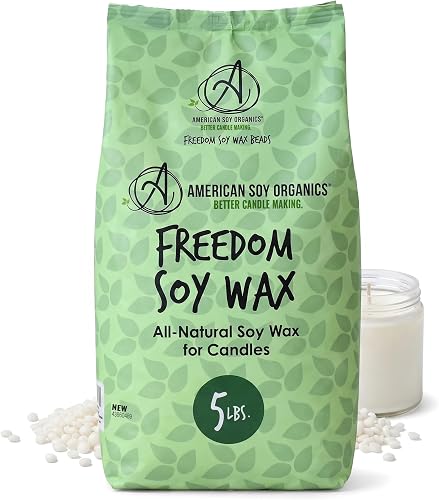 Soy wax Waxes Buy
 -
 Cotton candle wicks Wicks Buy
 -
 Wick stickers Wicks Buy
 -
 Wick centering devices Wicks Buy
 -
 Fragrance oils Fragrance oils Buy
 -
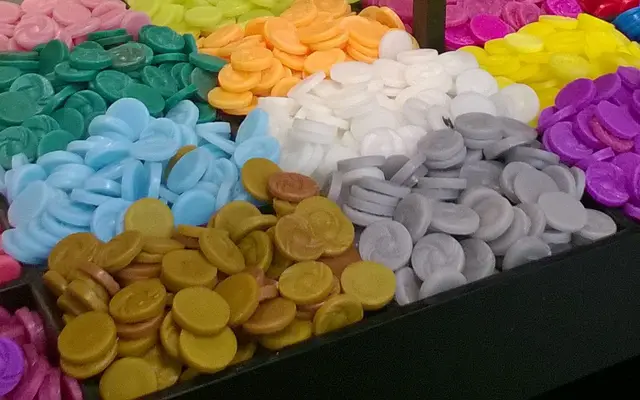
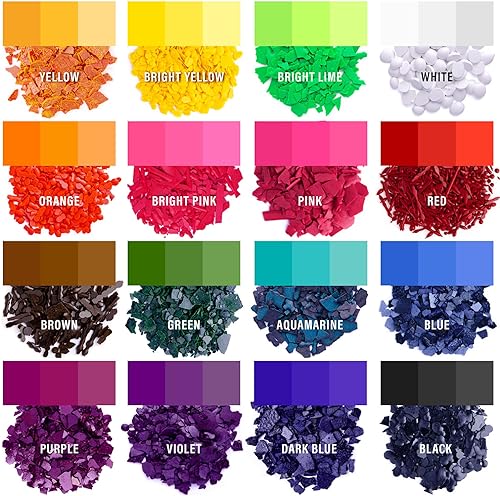 Candle dye chips Dyes Buy
 -
 Glass candle jars Containers Buy
 -
 Candle pouring pitcher Tools Buy
 -
 Candle thermometer Tools Buy
 -
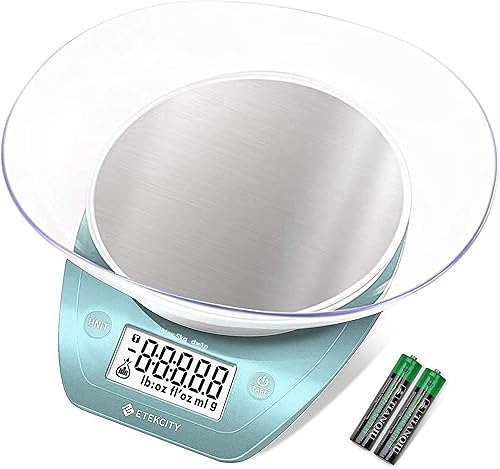 Digital scale for candle making Tools Buy
 -
 Heat gun for candles Tools Buy
 -
 Wick trimmer Tools Buy
What you need
This recipe makes three 7 oz (about 200 ml) jars, a great size for a first batch and for gifting. If you're using different containers, work out the exact amount with the wax calculator and the fragrance with the fragrance calculator.
| Item | Amount (three 7 oz jars) | Notes |
|---|---|---|
| Container soy wax | 500 g (about 17.6 oz) | Coconut or rapeseed blends work too |
| Fragrance oil | 40 g (about 1.4 oz), 8% | Typical range 6–10% |
| Pre-tabbed cotton wicks | 3 | Size to the jar diameter |
| Wick stickers | 3 | Hold the tab to the bottom |
| Wick centering bars | 3 | Or two chopsticks and a clip |
| Dye chips (optional) | 1 small chip | Less is more |
For tools you'll want a pouring pitcher used in a double boiler, a candle thermometer, a kitchen scale that reads in grams, sturdy heat-safe candle jars and, ideally, a heat gun to smooth the tops.
Preparation
Cover your work surface with newspaper or cardboard and set up away from drafts. Wash and fully dry the jars; any water or grease keeps the wax from sticking to the glass. If your house is cool, warm the jars for a few minutes in the oven on its lowest setting or with a heat gun so the wax doesn't pull away from the sides.
Stick each wick tab dead center on the bottom of the jar and keep the wick straight. Choose the wick size with the wick calculator: too small and you get tunneling, too big and you get soot and a tall, flickering flame. Have the fragrance oil already weighed out in a cup, because things move quickly from here.
Process
Melt the wax in a double boiler, never over direct heat. Soy wax is fully melted at around 70–80 °C (158–176 °F). Once it's clear, take it off the heat and let it cool to the fragrance-add temperature, usually 60–70 °C (140–158 °F) for soy, but always go by your wax's datasheet.
Add the fragrance oil and stir gently for a full two minutes. This is the most underrated step: if the fragrance doesn't bind well with the wax, the candle will smell weak or "sweat" oil. If you want color, melt in the dye chip now.
Let the wax cool to pouring temperature, typically 50–60 °C (122–140 °F) for soy. Pour slowly with the spout close to the rim, leaving about 1/2 inch (1.5 cm) of headspace. Set the centering bars and don't move the jars until the wax has set.
If a small sinkhole forms around the wick as it cools, run the heat gun over the surface or top it off with a little reserved wax at the same temperature.
Curing
This is the real secret to a candle that fills a room. Natural waxes need time to lock in fragrance, so cure your candles for at least 14 days at room temperature, lidded and out of direct sun. You can test one after the first week, but hot throw keeps improving into week two or three. The candle curing guide goes deeper.
First burn
Trim the wick to about 1/4 inch (5–6 mm) before lighting. On the first burn, let the melt pool reach the edges of the jar, usually 2–3 hours for a jar about 3 inches (7–8 cm) wide. That first "memory ring" sets how the candle burns for the rest of its life. Never leave it unattended, keep it away from curtains and drafts, and don't burn it for more than 4 hours at a time.
Always do a test burn on one candle from every batch before you gift or sell: watch the flame height, smoke, melt pool and how hot the glass gets.
Variations and ideas
- Different wax: coconut wax gives a creamy top and great throw; paraffin has the strongest throw of all but is petroleum-based. Compare them in soy vs paraffin.
- Scent blends: pair a base note (vanilla, sandalwood) with something fresh (citrus, mint) at roughly 70/30.
- Upcycled jars: fine if the glass is thick and has no chips or cracks.
- Travel version: check out candles in tins.
Troubleshooting
The candle barely smells
Usually it hasn't cured long enough, the fragrance went in too hot or too cool, or it wasn't stirred long enough. The room may also simply be too big for the candle.
It's tunneling
The wick is undersized or the first burn was too short. Go up one wick size in your next batch.
Black smoke or soot
The wick is too big or untrimmed, or the fragrance load is too high. See the candle troubleshooting guide.
Wet spots on the glass
Those patches where wax pulls away from the glass are common with soy and purely cosmetic. Warming the jars before pouring and letting them cool slowly helps.
Step by step
- 1 Wash and dry the jars and warm them slightly if your room is cool.
- 2 Stick a pre-tabbed wick to the center of each jar bottom with a wick sticker.
- 3 Weigh out 500 g (17.6 oz) of wax and 40 g (1.4 oz) of fragrance oil, an 8% load.
- 4 Melt the wax in a double boiler until fully liquid, around 70–80 °C (158–176 °F).
- 5 Remove from heat and let it cool to the fragrance-add temperature, 60–70 °C (140–158 °F) for soy.
- 6 Add the fragrance oil and optional dye and stir gently for two full minutes.
- 7 Cool to 50–60 °C (122–140 °F) and pour slowly, leaving 1/2 inch of headspace.
- 8 Set the wick centering bars to hold the wicks straight and leave the jars undisturbed.
- 9 Once set, smooth the tops with a heat gun if needed.
- 10 Cure the candles with lids on for at least 14 days at room temperature.
- 11 Trim the wick to 1/4 inch and test burn for 2–3 hours.
Tips
- Always weigh fragrance by weight against the wax, not by volume or spoonfuls.
- Stay within the maximum fragrance load on your supplier's datasheet and IFRA certificate.
- Log every batch: wax, fragrance, percentage, wick and temperatures. It saves a lot of trial and error.
- Test a single candle before pouring a big batch with a new scent.
- Cure candles with lids on so they hold onto their fragrance.
Mistakes to avoid
- Adding extra fragrance to make it stronger: the candle can sweat, smoke or burn poorly.
- Pouring too hot: you'll get cracks, sinkholes and wax pulling away from the glass.
- Lighting the candle the next day: without a cure, hot throw is weak.
- Eyeballing the wick size: it leads to tunneling or flames that are too tall. Use the calculator and test.
- Using thin decorative glass that can't handle the heat of a flame.
⚡ Our top picks: soy wax
Stock checked on October 6, 2026
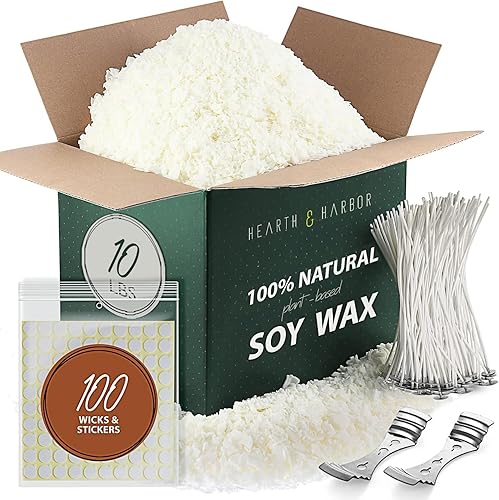
The best soy wax for scented jar candles
American Soy Organics Freedom Soy Wax Beads, All-Natural Candle Wax, 5 lbs
American Soy Organics Freedom Soy Wax Beads, All-Natural Candle Wax, 10 lbs

American Soy Organics Freedom Soy Wax Beads, All-Natural Candle Wax, 1 lb
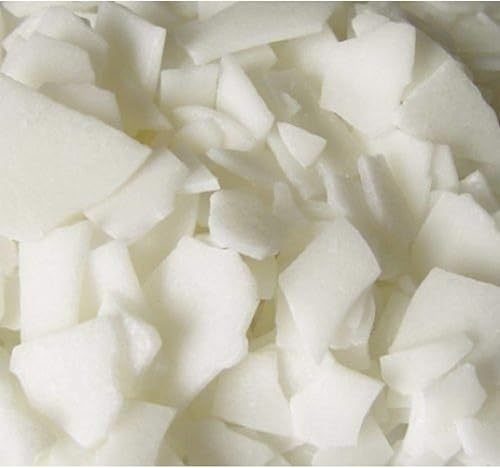
The Candlemaker's Store Natural Soy Wax, 10 lb. Bag
Hearth & Harbor Organic Candle Wax, Pure Soy Wax for Candle Making, 10 lbs

Hearth & Harbor Organic Candle Wax, Pure Soy Wax for Candle Making, 5 lbs
CeraVelas score: combines the average rating and the number of customer reviews on Amazon.
Frequently asked questions
How much fragrance oil goes in a candle?
Usually 6–10% of the wax weight. For 500 g (17.6 oz) of wax, that's 30–50 g (1–1.8 oz) of fragrance oil, never above your wax's or supplier's maximum.
Can I use essential oils instead of fragrance oils?
Yes, but they generally have a weaker hot throw and some have low flash points. Check the safety data sheet and always test burn.
Why doesn't my homemade candle smell?
The usual culprits are too short a cure, adding fragrance at the wrong temperature, not stirring enough, or too low a fragrance load.
What's the best wax for scented candles?
Soy is the easiest to start with, coconut blends throw scent beautifully, and paraffin has the strongest throw. It depends on your priorities.
Do I need warning labels if I sell candles?
Yes. In the US, follow your supplier's IFRA guidance and use standard candle safety warning labels (ASTM-style). Keep fragrance documentation on file.
More projects to make at home