🛈 As an Amazon Associate, CeraVelas earns from qualifying purchases. If you buy through our links, Amazon pays us a small commission at no extra cost to you. That’s how we keep the site running. How we choose.
📑 Contents
Almost every jar candle goes out with wax left behind: the last half inch you shouldn't burn, the sides that never melted or the tunnel you just couldn't fix. Multiply that by a year's worth of candles and you've got enough material for several new ones. Recycling candle leftovers is easy, cheap and really satisfying, but there are a few tricks: not all waxes play nicely together, the leftover scent is unpredictable and the jars need a proper cleaning. In this guide we'll show you how to do it safely and get good results. If you just want a step-by-step candle recipe, head to our recycled candles project.
Why recycling candles is worth it
Wax doesn't "expire": once it's melted and set again, it's still wax. What it loses with use is some of its scent and a bit of purity (soot, wick debris, dust). Reusing it has clear upsides:
- Less waste: the wax stays out of the trash and the jar gets a second life.
- Free material to practice techniques, test wicks or make everyday candles.
- Reused vessels, one of the most direct ways to make more eco-friendly candles.
Just keep your expectations realistic: a candle made from mixed leftovers will rarely be as flawless as one made with fresh wax. For candles you plan to gift or sell, use new wax; for home use, practice or wax melts, leftovers are perfect.
What you'll need
- Candle leftovers, sorted by wax type (more on why below).
- A pouring pitcher reserved for wax, plus a saucepan for a double boiler.
- A candle thermometer: with wax of unknown origin, it's even more important not to overheat it.
- A fine-mesh strainer or a piece of cotton cloth for straining.
- New pre-tabbed wicks and wick stickers to secure them.
- Clean jars, silicone molds or wax melt molds.
- Paper towels, gloves and a covered work surface.
How to get wax out and clean the jars
There are three common methods. Pick one based on the wax and the vessel:
Freezer
Pop the jar in the freezer for a few hours. The wax shrinks and usually comes out in one piece with a light tap or a nudge from a butter knife. This works great with paraffin and harder waxes; softer soy or coconut wax sometimes stays stuck.
Hot water
Set the jar on a towel and fill it with hot tap water or freshly heated water (not boiling if the glass is thin, to avoid thermal shock cracking it). The wax melts, floats to the top and, as it cools, forms a disc you can lift right out. This is the easiest method for plant-based waxes.
Double boiler
Set the jar in a saucepan of hot water over low heat until the wax melts, then pour it into your pouring pitcher. Handy if you want to recover all the wax without any water. Never heat the jar directly on the burner or put it in the microwave.
Next, pop out the old metal wick tab (a little hot water loosens stubborn ones), wipe out the residue with paper towels and wash the jar with hot, soapy water. If a greasy film remains, a cloth with a little rubbing alcohol takes it off. Let the jar dry completely before reusing it. And one important tip: never pour melted wax down the drain — it hardens in the pipes as it cools.
Sort your wax: what you can mix and what you can't
This is the step people skip most, and it's the one that causes the most trouble. Every wax has its own melt point, viscosity and ideal wick; mix them blindly and you can end up with a candle that burns poorly, tunnels or smokes. A general guide:
| Combination | OK? | What to expect |
|---|---|---|
| Soy + soy (or other plant-based container waxes) | Yes | The best option: similar behavior and easy to wick |
| Paraffin + paraffin | Yes | Works well; be careful mixing hard pillar paraffin with soft container paraffin |
| Plant-based + paraffin | With caution | They blend, but the burn is unpredictable; better for wax melts than candles |
| Beeswax + others | With caution | Hardens the blend and raises the melt point; you'll need a bigger wick |
| Gel wax + anything else | No | Gel doesn't mix with solid waxes; recycle it only with other gel |
| Leftovers with glitter, flowers or decorations | No | They can clog the wick or catch fire; strain them out or toss them |
Not sure what a candle was made of? A quick clue: soy is usually opaque, soft and slightly greasy to the touch; paraffin is shinier and harder; beeswax smells like honey even without added fragrance. When in doubt, save those leftovers for wax melts.
Group by scent and color too. Vanilla plus eucalyptus rarely turns out well, and mixed colors drift toward brown or gray. A layered "rainbow" candle, on the other hand, is a fun way to use up leftovers in different colors.
Melting and straining the recovered wax
- Melt the leftovers in a double boiler over medium-low heat, stirring now and then.
- Watch the temperature: for most container waxes, 160–175 °F (70–80 °C) is plenty. Used wax already contains fragrance oil, so don't overheat it or leave it unattended.
- Strain the liquid wax through a fine-mesh strainer or cotton cloth to remove soot, wick bits and debris.
- If you want to boost the scent, add only a little fresh fragrance oil: the leftovers already have some, and you don't know how much. Treat the recovered wax as "already scented" and don't exceed the wax's maximum fragrance load.
- If the blend looks very dark or grayish, mix in some fresh wax of the same type to lighten it up and improve the burn.
New wicks: the step that makes or breaks it
Don't reuse old wicks: they're short, charred and their size no longer matches anything. Use new pre-waxed cotton wicks, stick them to the bottom of the clean jar with a wick sticker and center them with a clothespin or a wick bar.
The size depends on the jar's diameter and the main wax in your blend. Our wick calculator gives you a starting point; with recycled blends, test the suggested size and the next size up. Always do a test burn: let the candle burn for a couple of hours and check whether the melt pool reaches the edges, the flame is steady and there's no smoke. If something's off, our guide to common candle problems will help you troubleshoot.
Pour the wax at the recommended temperature for its type, let it cool at room temperature away from drafts and, if the surface sinks around the wick, top it off with a bit of reserved wax.
Wax melts and other ideas for leftovers
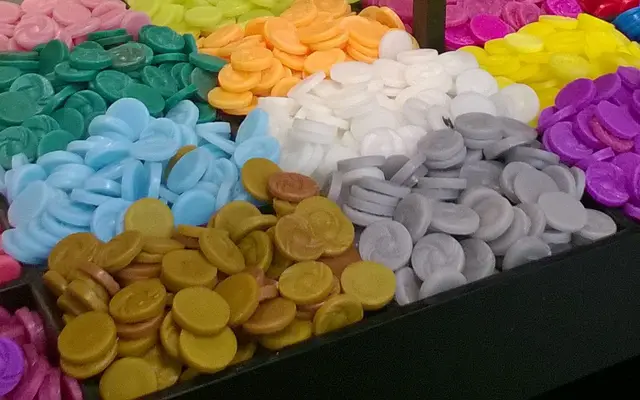
If there's one foolproof way to recycle candles, it's turning the leftovers into wax melts. There's no wick involved, so it doesn't matter if your wax blend isn't perfect: it just needs to melt in the warmer and release scent. Pour the strained wax into silicone wax melt molds, let it set and pop the melts out. You can boost the scent with a little fresh fragrance oil, always within the manufacturer's limits.
A few more handy ideas:
- Refillable tealights: fill clean aluminum or polycarbonate tealight cups with recycled wax and a new pre-tabbed wick.
- Layered candles: alternate leftover colors for a decorative candle.
- Fire starters: cardboard egg cartons filled with sawdust, or pinecones dipped in wax, for the grill or fireplace.
- DIY lubricant: rub a chunk of wax on sticky drawers or stiff zippers.
Safety when recycling wax
- Always melt wax in a double boiler or a temperature-controlled melter, never over a direct flame.
- Never leave wax on the heat unattended: scented leftovers can ignite if they overheat.
- If the wax starts smoking, take it off the heat right away. If it catches fire, cover the pot and turn off the burner — never use water.
- Check jars before reusing them: glass with cracks or chips can break under heat.
- Keep your wax tools for wax only — don't use them for cooking again.
You'll find all the rules summed up in our candle safety guide.
Most popular projects
Frequently asked questions
Can I mix leftovers from candles made with different waxes?
It's best not to. Soy with soy or paraffin with paraffin works well; plant wax and paraffin blends burn unpredictably, and gel wax doesn't mix with anything else. If you don't know what a wax is, use it for wax melts.
How do I get leftover wax out of the bottom of a jar?
Use hot water: fill the jar, let the wax float up and harden, then lift out the disc. You can also freeze the jar for a few hours so the wax shrinks and pops out, especially if it's paraffin.
Can I reuse the old wick?
No. It's charred and short, and its size won't fit anymore. Always use a new wick sized for the jar's diameter and do a test burn.
Do I need to add more fragrance to recycled wax?
Leftovers still hold some scent. If you want to boost it, add only a little and treat the recovered wax as already scented, never exceeding the wax's maximum fragrance load.
Can I pour melted wax down the sink?
Never. Wax hardens as it cools and can clog your pipes. Let it set and throw it in the trash — or better yet, reuse it.