🛈 As an Amazon Associate, CeraVelas earns from qualifying purchases. If you buy through our links, Amazon pays us a small commission at no extra cost to you. That’s how we keep the site running. How we choose.
📑 Contents
⚡ Our top picks: soy wax
Stock checked on October 6, 2026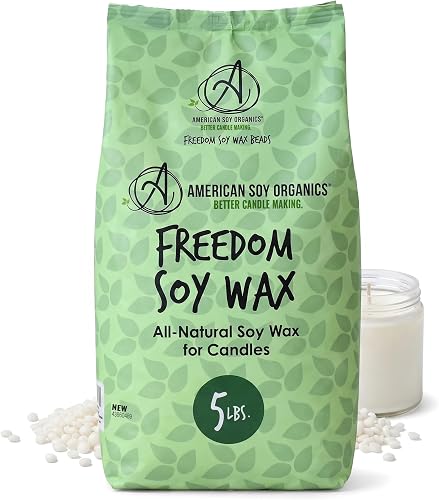

Best soy wax in stock
American Soy Organics Freedom Soy Wax Beads, All-Natural Candle Wax, 5 lbs
American Soy Organics Freedom Soy Wax Beads, All-Natural Candle Wax, 10 lbs

American Soy Organics Freedom Soy Wax Beads, All-Natural Candle Wax, 1 lb
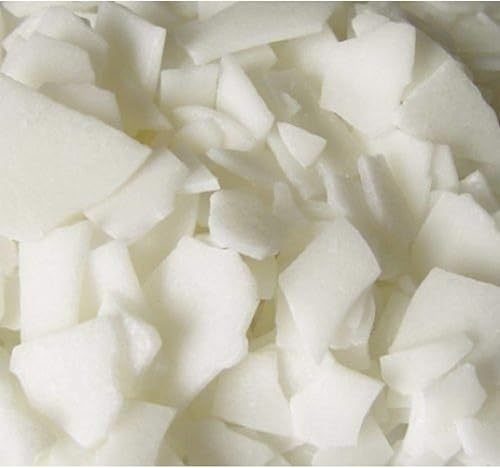
The Candlemaker's Store Natural Soy Wax, 10 lb. Bag
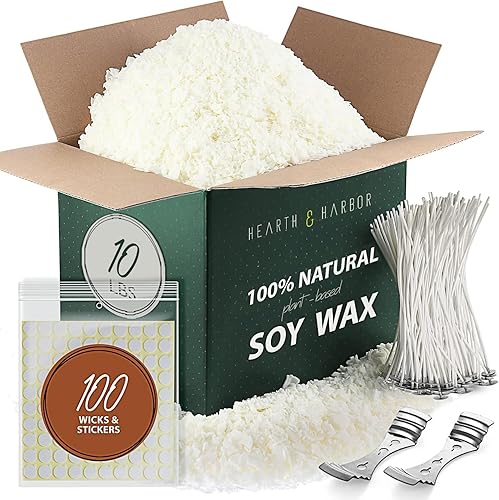
Hearth & Harbor Organic Candle Wax, Pure Soy Wax for Candle Making, 10 lbs

Hearth & Harbor Organic Candle Wax, Pure Soy Wax for Candle Making, 5 lbs
CeraVelas score: combines the average rating and the number of customer reviews on Amazon.
What soy wax is
Soy wax is made by hydrogenating soybean oil, which turns the liquid oil into a solid, creamy white wax with a low melt point. It's renewable, vegan and biodegradable, which is why it's the first choice for most home candle makers and plenty of small candle brands. Its sweet spot is container candles: it grips the glass, sets up with a soft matte finish and burns slowly with a calm flame.
The trade-off is that soy is a "living" wax. It keeps crystallizing over time, can develop white frosting and needs a cure before the scent really opens up. Once you understand those quirks, you can get results that look and perform like a boutique candle.
Types and brands to look for
There are softer container soy waxes and harder pillar soy waxes, which also make great wax melts. Well-known options include:
- Golden Brands 464: the classic container soy, forgiving and easy to pour.
- Golden Brands 444: a bit softer and creamier, popular for smooth tops.
- Golden Brands 415: a firmer soy for pillars, votives and melts.
- NatureWax C3 (Cargill): a widely used container wax with an even finish.
- EcoSoya CB-Advanced and KeraSoy Container (Kerax, UK): common with European suppliers.
On Amazon you'll also find plenty of generic soy wax flakes. Check that the listing says container or pillar, and look for a supplier that shares a spec sheet with melt point and max fragrance load.
Key data
| Property | Typical value |
|---|---|
| Melt point | 46–54 °C (115–129 °F) |
| Add fragrance at | 80–85 °C (176–185 °F) |
| Pour temperature | 55–65 °C (131–149 °F) |
| Max fragrance load | up to 10% (check the spec sheet) |
| Best for | container candles, wax melts, tea lights |
| Common wicks | ECO, CD, wood |
| Cure time | 1–2 weeks |
| Approx. density | 0.90 g/ml |
| Vegan | Yes |
These are typical ranges. Every manufacturer publishes its own numbers, and your supplier's spec sheet always wins.
Pros and cons
Soy is easy to love: it melts at low temperatures, cleans up with hot soapy water, burns slower than paraffin and comes from a plant. On the downside, hot throw is a little softer than paraffin, it frosts easily, and tops can turn bumpy after the first burn. Still deciding? Read our soy vs paraffin comparison.
How to work with soy wax
Weigh your wax on a kitchen scale and melt it in a double boiler or pouring pitcher, never over direct heat. Bring it to 80–85 °C (176–185 °F), add your fragrance oil and stir gently for a full two minutes. Let it cool to 55–65 °C (131–149 °F) and pour into clean, slightly warmed candle jars with the wick already centered. Let the candles set at room temperature, away from drafts, and wait at least a week before lighting: the scent improves a lot with a proper cure.
Wicks and fragrance load
Soy is a dense wax, so it needs a wick that can melt it all the way to the edge. ECO wicks and CD wicks are reliable choices, and wood wicks give you that cozy crackle. For a 3-inch (7–8 cm) jar, an ECO 6–8 or CD 8–10 is a sensible starting point; run the numbers in our wick calculator and always confirm with a test burn. For fragrance, 6–10% is usually plenty. More oil doesn't always mean more scent and can make the candle sweat.
Common problems
Frosting
White crystalline streaks are natural in soy. Pouring a bit cooler and avoiding temperature swings helps; frosting doesn't affect the burn.
Wet spots
Patches where the wax pulls away from the glass. Warm your jars before pouring and let candles cool away from windows.
Rough tops and sinkholes
A quick pass with a heat gun smooths the surface.
Tunneling
The wick is too small or the first burn was too short. On the first burn, let the melt pool reach the edge. More fixes in our candle troubleshooting guide.
What soy wax is used for
- Scented candles in glass jars
- Travel tin candles
- Homemade wax melts (best with pillar soy)
- Tea lights and small candles
- Matte-finish gift candles
Pros and cons
👍 Pros
- ✓ Plant-based, renewable and vegan
- ✓ Slow burn with a calm flame
- ✓ Low melt point and easy to work with
- ✓ Cleans up with hot soapy water
- ✓ Great glass adhesion in container blends
👎 Cons
- ✗ Hot throw is softer than paraffin
- ✗ Prone to frosting and wet spots
- ✗ Needs a 1–2 week cure
- ✗ Too soft for pillars unless you buy a pillar grade
How to use soy wax, step by step
- Weigh the wax: a jar holds roughly its volume in ml times 0.9 in grams (about 0.8 oz of wax per fluid ounce).
- Melt the wax in a double boiler or pouring pitcher, never over direct heat.
- Stick a pre-tabbed wick to the bottom of the jar and center it with a wick holder.
- At 80–85 °C (176–185 °F), take the wax off the heat and add fragrance oil (6–10%).
- Stir gently for two full minutes so the fragrance binds with the wax.
- Let it cool to 55–65 °C (131–149 °F) and pour slowly into a slightly warmed jar.
- Let the candle set for 24 hours at room temperature, away from drafts.
- Trim the wick to 1/4 inch (5–6 mm) and cure for 1–2 weeks before lighting.
Tips
- Warm your jars with a heat gun or in a low oven to prevent wet spots.
- Log the temperatures and fragrance load for every batch so you can repeat what works.
- If the top sets bumpy, a pass with a heat gun fixes it in seconds.
- Let the first burn reach a full melt pool to avoid tunneling.
- Always run a complete test burn before gifting or selling.
Projects with soy wax

Soy wax vs other waxes
- Soy wax vs Rapeseed wax
- Soy wax vs Coconut wax
- Soy wax vs Beeswax
- Soy wax vs Paraffin wax
- Soy wax vs Palm wax
- Soy wax vs Gel wax
- Soy wax vs Wax melt wax
- Soy wax vs Massage candle wax
- Soy wax vs Pillar candle wax
Related supplies
 🧵 Wicks Cotton candle wicks Pre-tabbed, pre-waxed cotton wicks are where almost every homemade candle starts: inexpensive, reliable and available in dozens of sizes. See guide →
 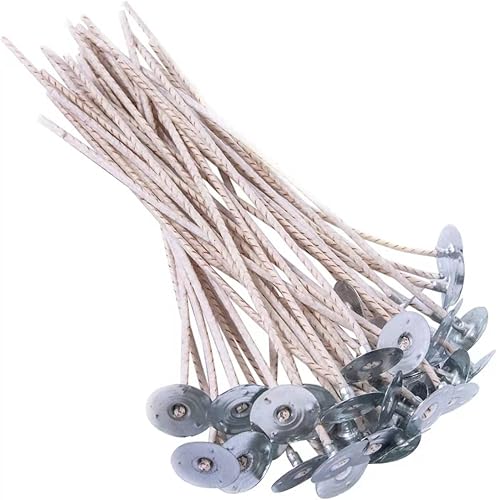 🌱 Wicks ECO wicks ECO wicks are one of the most popular series for natural wax candles: they burn clean, curl on their own and mushroom very little. See guide →
  🪵 Wicks Wooden wicks Wooden wicks give a candle a wide, low flame and that soft fireplace crackle. They look gorgeous, but they are pickier than cotton wicks. See guide →
  🌸 Fragrance oils Fragrance oils Candle fragrance oils are scent blends formulated to handle the heat of wax and fill a room with fragrance, both before and while the candle burns. See guide →
  🫙 Containers Glass candle jars Empty glass candle jars are the classic home for container candles: they show off the wax, hold heat evenly and, if you pick the right glass, stay safe from the first light to the last. See guide →
  🌡️ Tools Candle thermometer A candle thermometer takes the guesswork out of melting, adding fragrance and pouring, and it is the single biggest upgrade to the look and scent throw of your candles. See guide →
 Frequently asked questions
What's the best soy wax for beginners?
A container soy like Golden Brands 464 or NatureWax C3 is very forgiving. It melts easily, sticks to glass well and tolerates small temperature mistakes. For pillars or wax melts, choose a firmer soy such as Golden Brands 415.
How much fragrance oil can soy wax hold?
Usually 6–10% of the wax weight, never above the manufacturer's maximum. For 16 oz of wax, 8% is about 1.3 oz of fragrance oil. Adding more doesn't guarantee a stronger scent and can make the candle sweat.
Why does my soy candle have white spots?
That's frosting, a natural crystallization of soy wax. It doesn't affect how the candle burns. Pouring cooler, cooling without drafts and using waxes with anti-frosting additives all help.
How long should soy candles cure?
At least 48 hours to harden, but the scent peaks after one to two weeks. Keep curing candles covered and at room temperature.
Does soy wax produce soot?
With the right wick trimmed to about 1/4 inch, soy burns very cleanly. Black smoke usually means the wick is too large or needs trimming. Never leave a burning candle unattended.