🛈 As an Amazon Associate, CeraVelas earns from qualifying purchases. If you buy through our links, Amazon pays us a small commission at no extra cost to you. That’s how we keep the site running. How we choose.
📑 Contents
⚡ Our top picks: coconut wax
Stock checked on October 6, 2026
Best coconut wax in stock
American Soy Organics Freedom Coconut Soy Wax Beads, Candle Wax, 10 lbs
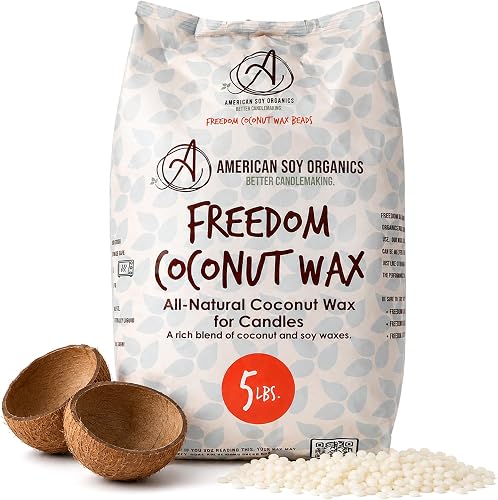
American Soy Organics Freedom Coconut Soy Wax Beads, Candle Wax, 5 lbs

American Soy Organics Freedom Coconut Soy Wax Beads, Candle Wax, 1 lb
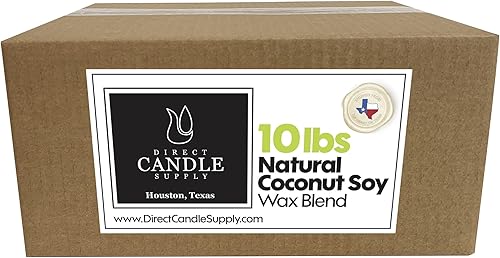
Coconut Soy Wax Slab, 10 lb Candle Wax Block for Candle Making

Coconut Soy Wax Beads, 5 lb Candle Wax for Candle Making
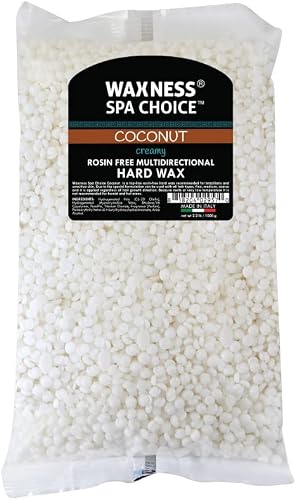
Waxness Spa Choice Rosin Free Multidirectional Hard Wax Coconut 2.2 lb / 1 kg
See more coconut wax on Amazon →
CeraVelas score: combines the average rating and the number of customer reviews on Amazon.
What coconut wax is
Coconut wax starts with hydrogenated coconut oil. On its own, though, that oil is far too soft to make a stable candle; it melts close to body temperature. That's why nearly everything sold as "coconut wax" is a blend: coconut-soy, coconut-rapeseed, coconut-apricot or, sometimes, coconut with a little paraffin. If you want a 100% plant-based candle, read the label carefully.
The result is a bright white, creamy wax with smooth tops, good glass adhesion and a real talent for holding and releasing fragrance. It's a favorite of premium candle brands and the base for many massage candle waxes.
Types and what to look for
- Coconut-soy: the most common; coconut's creaminess with soy's structure.
- Coconut-apricot: extra creamy with a silky finish, popular for luxury candles.
- Coconut-rapeseed: common with European suppliers.
- Paraffin-containing blends: cheaper and very stable, but no longer fully plant-based.
In the US, CandleScience Coconut 83 is a well-known option, and most suppliers carry their own coconut blend. Check the spec sheet for coconut content, melt point and max fragrance load.
Key data
| Property | Typical value |
|---|---|
| Melt point | 38–46 °C (100–115 °F) |
| Add fragrance at | 75–80 °C (167–176 °F) |
| Pour temperature | 55–65 °C (131–149 °F) |
| Max fragrance load | up to 12% (depends on the blend) |
| Best for | container candles, massage candles, soft wax melts |
| Common wicks | cotton (ECO, CD), wood |
| Cure time | 1–2 weeks |
| Approx. density | 0.91 g/ml |
| Vegan | Yes (if the blend is plant-based) |
Typical values for container blends; every manufacturer publishes its own.
Pros and cons
The good: strong scent throw, smooth tops with very little frosting, a bright white that makes pastel colors pop, and a slow burn. The not-so-good: it costs more than soy, the low melt point means it softens in summer heat or in transit, and it can't be used for pillars. Weighing your options? See coconut vs soy.
How to work with it
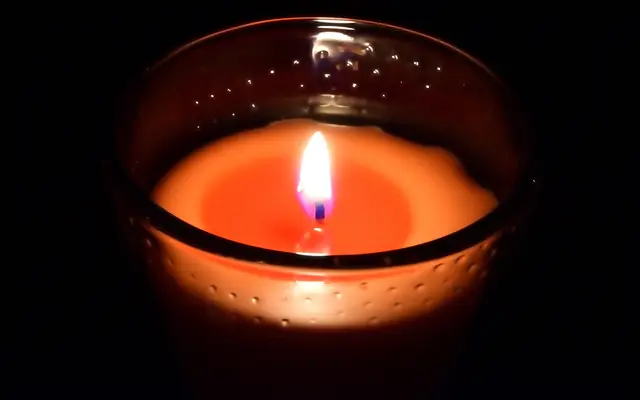
Melt the wax in a double boiler to 75–80 °C (167–176 °F). Add your fragrance oil at that temperature, stir for two minutes, then let it cool to 55–65 °C (131–149 °F) and pour into clean, slightly warmed jars; amber glass jars look especially good with it. Let candles set at room temperature, away from drafts. Coconut cures faster than soy, but give it at least a week before lighting to enjoy the full scent.
Wicks and fragrance
Because it's soft, coconut wax melts easily and usually needs slightly smaller wicks than soy. Cotton ECO or CD wicks are a safe bet, and wood wicks perform beautifully because coconut feeds the flame so well. At 8–10% fragrance oil you'll get a strongly scented candle; some blends take up to 12%, but always confirm the max with our fragrance calculator and the manufacturer's spec sheet. It's ideal for scented jar candles.
Common problems
Soft or sweating candles
Usually heat or too much fragrance oil. Store candles somewhere cool and stay under the max load.
Flame too large
The wick is oversized for such a soft wax. Drop a size and run another test burn.
Pitted tops
Pour a little cooler, or smooth the cooled surface with a heat gun.
Candles warping during shipping
Avoid shipping during heat waves and use insulated packaging. That's the trade-off of a low-melt wax.
What coconut wax is used for
- Luxury scented jar candles
- Massage candles (in dedicated blends)
- Candles in amber or colored glass
- Soft wax melts for warmers
- Gift candles with a creamy finish
Pros and cons
👍 Pros
- ✓ Excellent cold and hot throw
- ✓ Smooth, bright white tops
- ✓ Very little frosting
- ✓ Slow, clean burn
- ✓ Handles high fragrance loads
👎 Cons
- ✗ More expensive than soy
- ✗ Softens in summer heat
- ✗ Almost always a blend, so you must read the label
- ✗ Not suitable for pillars
How to use coconut wax, step by step
- Work out your wax: multiply the jar volume in ml by 0.9 for grams (about 0.8 oz per fluid ounce).
- Melt the wax in a double boiler to 75–80 °C (167–176 °F).
- Stick a pre-tabbed wick to the bottom and center it with a wick holder.
- Add fragrance oil (8–10%, max per spec sheet) at 75–80 °C (167–176 °F).
- Stir gently for two minutes.
- Let it cool to 55–65 °C (131–149 °F) and pour into warmed jars.
- Let candles set for 24 hours away from drafts.
- Trim the wick to 1/4 inch and cure for at least a week.
Tips
- Read the ingredients: “coconut wax” almost always means a blend.
- Test one wick size smaller than you'd use in soy.
- Store finished candles somewhere cool, especially in summer.
- Amber or frosted jars show off its creamy white color.
- Always run a multi-hour test burn.
Projects with coconut wax
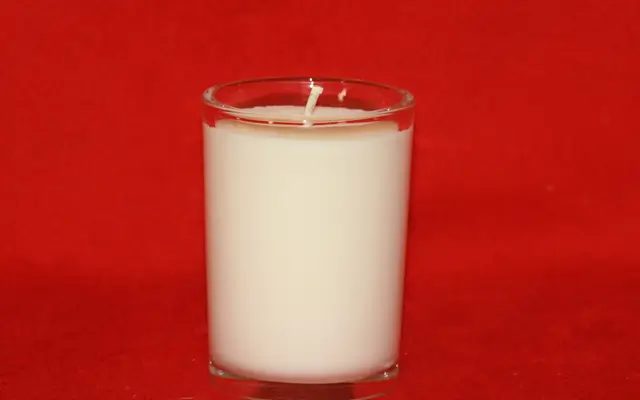
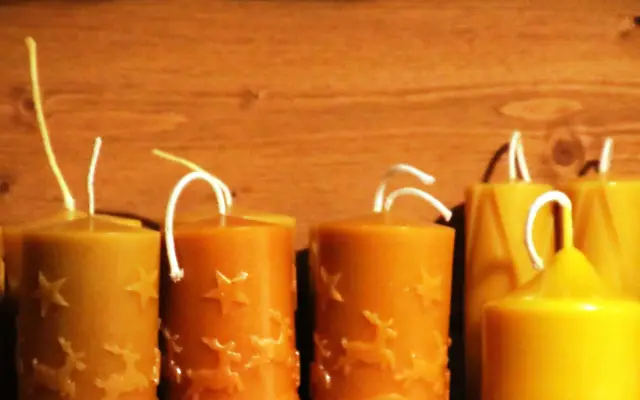
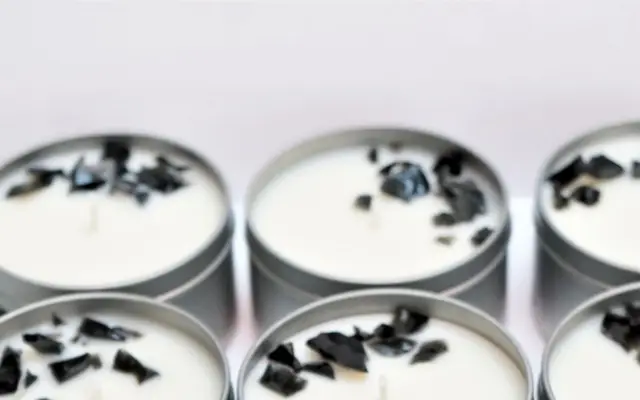
Coconut wax vs other waxes
- Coconut wax vs Soy wax
- Coconut wax vs Rapeseed wax
- Coconut wax vs Beeswax
- Coconut wax vs Paraffin wax
- Coconut wax vs Palm wax
- Coconut wax vs Gel wax
- Coconut wax vs Wax melt wax
- Coconut wax vs Massage candle wax
- Coconut wax vs Pillar candle wax
Related supplies
 🧵 Wicks Cotton candle wicks Pre-tabbed, pre-waxed cotton wicks are where almost every homemade candle starts: inexpensive, reliable and available in dozens of sizes. See guide →
  🪵 Wicks Wooden wicks Wooden wicks give a candle a wide, low flame and that soft fireplace crackle. They look gorgeous, but they are pickier than cotton wicks. See guide →
 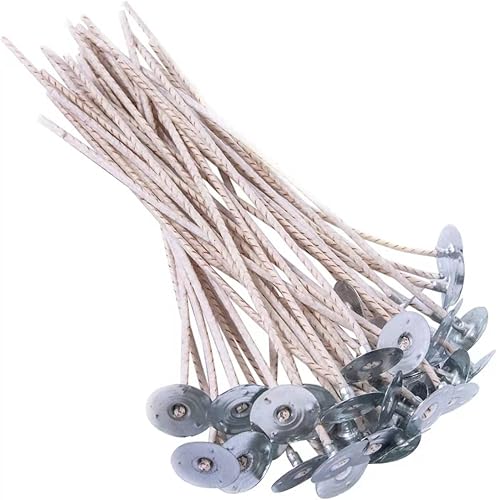 🌱 Wicks ECO wicks ECO wicks are one of the most popular series for natural wax candles: they burn clean, curl on their own and mushroom very little. See guide →
  🌸 Fragrance oils Fragrance oils Candle fragrance oils are scent blends formulated to handle the heat of wax and fill a room with fragrance, both before and while the candle burns. See guide →
  🟤 Containers Amber glass candle jars Amber glass jars give homemade candles a warm apothecary look and help protect fragrance and color from light. They work just like clear jars, with a few details worth knowing. See guide →
  🫙 Containers Glass candle jars Empty glass candle jars are the classic home for container candles: they show off the wax, hold heat evenly and, if you pick the right glass, stay safe from the first light to the last. See guide →
 Frequently asked questions
Is coconut wax 100% coconut?
Almost never. Hydrogenated coconut oil is too soft on its own, so it's blended with soy, rapeseed, apricot or sometimes paraffin. If you want a fully plant-based candle, check the composition on the spec sheet.
Does coconut wax smell stronger than soy?
Generally, yes: coconut wax tends to release fragrance better, both unlit and lit. That said, fragrance oil quality and wick choice matter just as much as the wax.
How much fragrance oil can coconut wax hold?
8–10% is usually the sweet spot, and some blends accept up to 12%. Never exceed the maximum on the manufacturer's spec sheet.
Can I use coconut wax for massage candles?
Yes, many massage candle waxes contain coconut because of its low melt point. For massage, though, you need a skin-safe blend and fragrance oils rated for skin contact.
Why is my coconut candle warping?
Its low melt point makes it soften in heat. Store it somewhere cool and don't leave it in direct sun or in a hot car.