🛈 As an Amazon Associate, CeraVelas earns from qualifying purchases. If you buy through our links, Amazon pays us a small commission at no extra cost to you. That’s how we keep the site running. How we choose.
📑 Contents
⚡ Our top picks: candle dye chips
Stock checked on October 6, 2026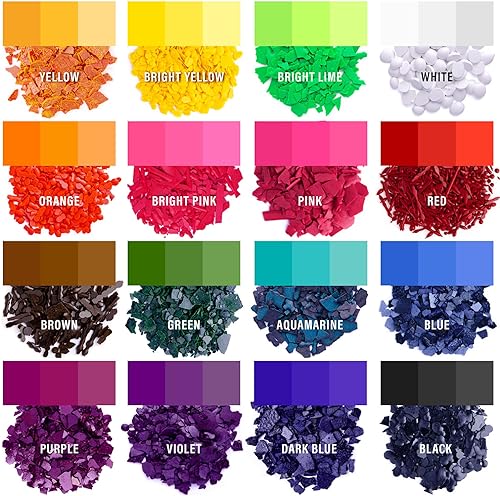

Best candle dye chips in stock
Candle Dye for Soy Wax - 16 Colors Candle Wax Dye Chips - Candle Making Dye
Candle Dye for Soy Wax - 24 Candle Wax Dye Chips in Jars, Candle Making Dye
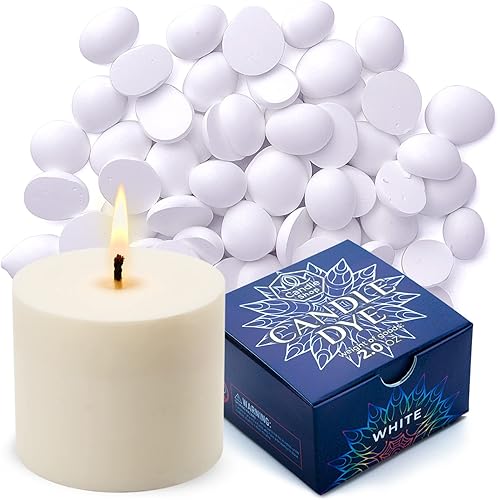
White Candle Dye 2 oz for Soy Candle Making – Wax Color Chips

Black Candle Dye 2 oz for Soy Candle Making – Wax Color Chips
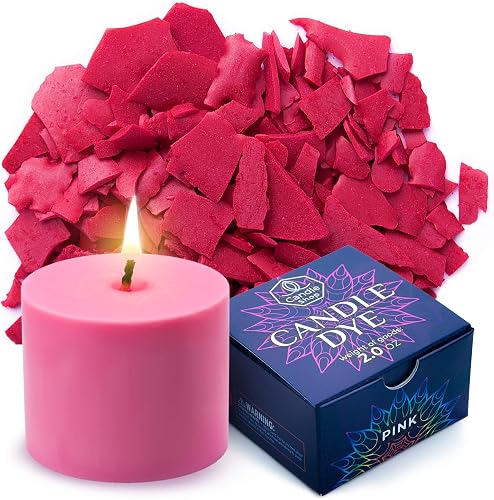
Pink Candle Dye 2 oz for Soy Candle Making – Wax Color Chips
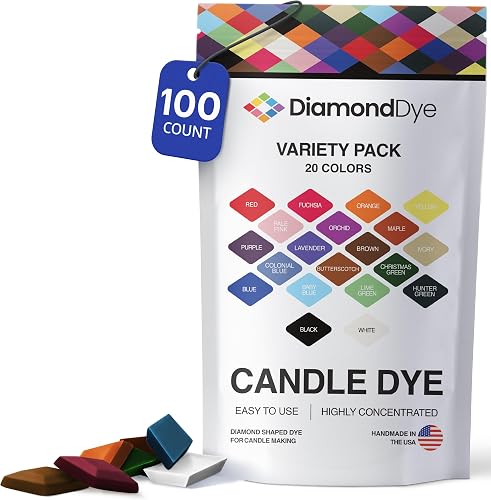
Candle Dye Chips Variety Pack, 20 Colors, Soy & Paraffin Candle Making
See more candle dye chips on Amazon →
CeraVelas score: combines the average rating and the number of customer reviews on Amazon.
What candle dye chips are
They’re oil-soluble dyes (they dissolve in fats and oils) blended into a wax base and sold as chips, flakes or small blocks. As they melt into your wax, the color spreads evenly with no specks. They’re made to burn: used at the right amount, they won’t clog your wick.
That’s why it’s best not to improvise with other products. Food coloring is water-based and won’t mix with wax; it sinks to the bottom or leaves spots. Crayons contain solid pigments that can clog the wick and make the flame sputter, smoke or go out. And powdered pigments like mica don’t dissolve either, so save them for decorating and wax melts.
Formats
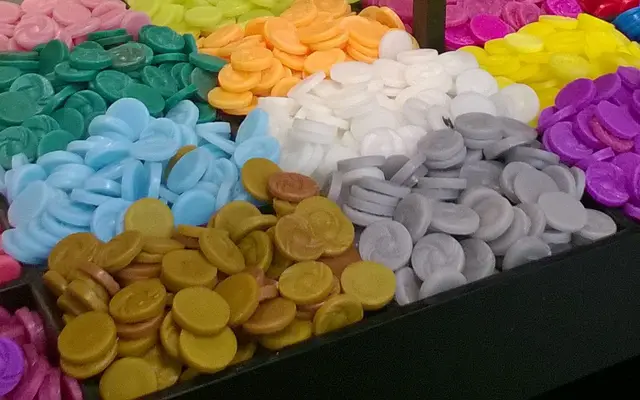
- Chips: small pre-measured discs, super handy for repeating colors.
- Flakes: added by the pinch; great for soft shades and fine-tuning.
- Blocks: grated or cut; very economical and common in basic color sets.
If you need pinpoint precision or very saturated colors, liquid candle dye is an alternative. For most homemade candles, chips are easier to handle and less messy.
How much dye to use
Every brand states how much wax one chip (or one gram of dye) will color, and that’s your main reference. From there, adjust for the shade you want. Weigh your wax on a kitchen scale and write down what you add so you can match the color in your next batch.
| Target shade | Approximate amount | Tip |
|---|---|---|
| Pastel | ¼ to ½ of the supplier’s dose | Ideal for soy, which lightens colors |
| Medium | The supplier’s dose | Starting point for almost everything |
| Deep | Up to double, never over the max | Check that the wick doesn’t clog |
| Very dark or black | Not recommended | Lots of dye hurts the burn |
Keep in mind that melted wax looks much darker than the finished candle. To see the true shade, drip a little colored wax onto white paper or a cold spoon and let it set.
How to use them
- Melt the wax in a double boiler or a melting pot.
- Add the dye once the wax is fully liquid and hot, usually before the fragrance oil.
- Stir until there’s nothing left undissolved at the bottom.
- Do the drip test and adjust: more wax if it’s too dark, more dye if it’s too light.
- Add your fragrance at the recommended temperature, around 176–185 °F (80–85 °C) for most soy waxes, stir and pour.
Common mistakes
- Using too much dye. Excess dye can clog the wick and cause smoking; if it happens, go up one wick size and test again.
- Expecting vivid colors in soy wax. Soy tends to lighten shades and can develop frosting (whitish crystals), which shows more on dark colors.
- Leaving candles in the sun. Many colors fade in light, so store them somewhere dark.
- Not writing down the recipe. Without notes on grams and chips, matching a shade is nearly impossible.
- Mixing in non-candle colorants. Stick to dyes made for candles.
Find more ideas and color combinations in our guide to coloring candles, and if you’re not sure how much wax you need, the wax calculator tells you in seconds.
Pros and cons
👍 Pros
- ✓ Easy to measure and repeat
- ✓ Less messy than liquid dye
- ✓ Made to burn without clogging the wick
- ✓ A little goes a long way
👎 Cons
- ✗ Less precise for very soft shades
- ✗ Colors look lighter in soy
- ✗ Can fade in sunlight
- ✗ Too much affects the burn
How to use candle dye chips, step by step
- Melt the wax.
- Add the dye when the wax is fully liquid.
- Stir until completely dissolved.
- Check the shade with a drop on paper.
- Adjust if needed.
- Add fragrance and pour.
Tips
- Start small: it’s always easier to darken than to lighten.
- Mix primary colors to create your own shades.
- Keep a drop of each color on an index card with its recipe.
- For pastels in soy, a sliver of a chip is often enough.
Projects with candle dye chips
Related supplies
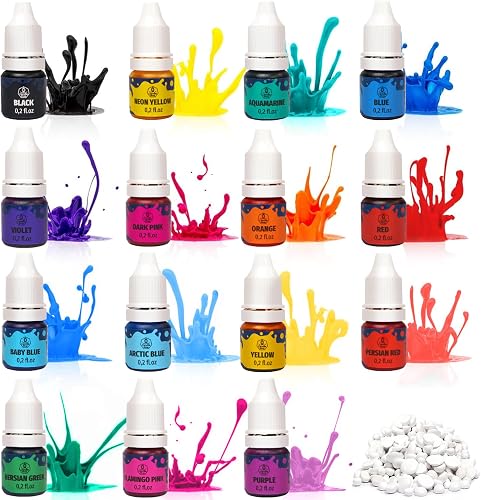 💧 Dyes Liquid candle dye Liquid candle dye is a concentrated colorant you add by the drop. It gives very precise colors and is the go-to for deep shades and gel candles. See guide →
  ✨ Dyes Mica powder Mica powder adds pearly shimmer and color to wax melts and candle surfaces. Just remember: it doesn’t dissolve in wax, so it shouldn’t go in the wax that burns around a wick. See guide →
 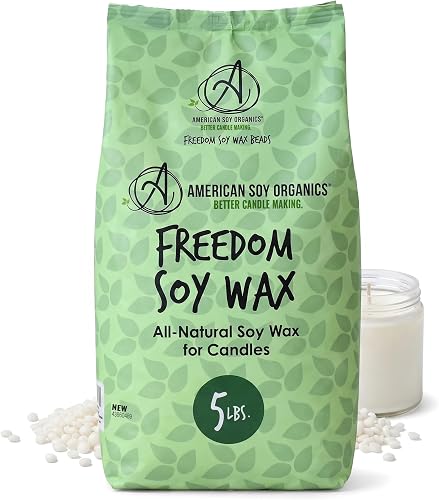 🫘 Waxes Soy wax Soy wax is the go-to natural wax for container candles: creamy, beginner-friendly and known for a slow, clean burn. See guide →
  🕯️ Waxes Paraffin wax Paraffin wax is the most versatile and affordable candle wax: it takes bold colors, releases easily from molds and delivers the strongest scent throw. See guide →
 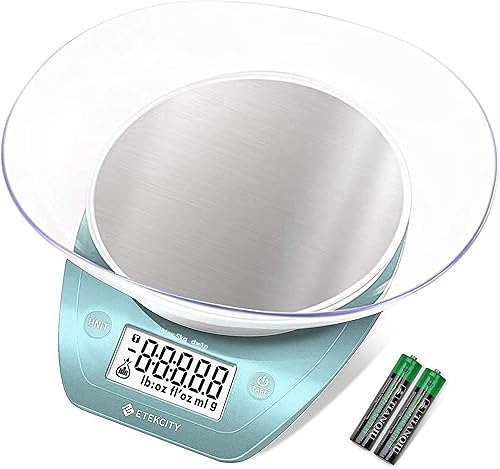 ⚖️ Tools Digital scale for candle making Candle making is done by weight, not by volume, so a simple digital scale is what turns a recipe into a candle you can repeat exactly. See guide →
  🫕 Tools Candle pouring pitcher A candle pouring pitcher is the one tool every candle maker uses on every single batch: you melt the wax in it, stir in the fragrance and pour straight into your jars without a mess. See guide →
 Frequently asked questions
Can I use food coloring in candles?
No. It’s water-based and won’t mix with wax, so it separates or leaves spots. Use dyes made for candles.
Can I color candles with crayons?
It’s not a good idea. The pigments can clog the wick and make the candle smoke or go out.
When do I add candle dye?
Once the wax is completely melted, usually before the fragrance oil, stirring until it fully dissolves.
Why is my soy candle lighter than expected?
Soy lightens colors as it sets. Always check the shade with a test drop and adjust before you pour.
Does dye affect the wick?
Not at normal amounts, but too much can clog it. If you use very deep colors, test burn and adjust your wick size.