🛈 As an Amazon Associate, CeraVelas earns from qualifying purchases. If you buy through our links, Amazon pays us a small commission at no extra cost to you. That’s how we keep the site running. How we choose.
📑 Contents
⚡ Our top picks: fragrance oils
Stock checked on October 6, 2026

![VINEVIDA [4oz] Mahogany Teakwood Fragrance Oil for Candle…](https://m.media-amazon.com/images/I/41SJUjEEXsL._AC_SL500_.jpg)
Best fragrance oils in stock
P&J Fragrance Oil Halloween Set | Autumn Wreath, Pumpkin Pie, Candy Corn, Marshmallow, Night Air, and Caramel…
P&J Fragrance Oil Christmas Set | Christmas Wreath, Mistletoe, Candy Cane, Gingerbread, Cinnamon, and…

P&J Fragrance Oil Farmhouse Set | Old Books, Butterscotch, Honey, Warm Vanilla Sugar, Pecan Pie, Maple Syrup…
VINEVIDA [4oz] Mahogany Teakwood Fragrance Oil for Candle Making and Soap Making - Premium Candle Scents for…

Fruity Fragrance Oil Set of 10 for Candle and Soap Making

Horbäach Japanese Cherry Blossom Fragrance Oil | 1 fl oz (30ml)
See more fragrance oils on Amazon →
CeraVelas score: combines the average rating and the number of customer reviews on Amazon.
What fragrance oils are
A fragrance oil is a blend of aromatic compounds, natural and synthetic, dissolved in an oil base. Unlike essential oils, which come from a single plant, fragrance oils are built to recreate a specific scent (vanilla, fig, clean laundry, sugar cookie…) and, when they’re candle-grade, to stay stable in the wax and as it burns.
Make sure you buy candle-safe fragrance oils. Oils sold for diffusers or humidifiers often contain solvents or water that won’t bind with wax; they can sweat out on the surface and some are more flammable. A reputable supplier provides a safety data sheet, an IFRA certificate and a recommended maximum fragrance load.
Scent families and notes
Fragrances are described in notes: top notes (citrus, herbs, what you smell first), middle notes (florals, spices) and base notes (woods, vanilla, amber, musk). In candles, base and middle notes usually throw better; straight citrus is volatile and fades sooner. Many commercial blends balance all three so the candle smells good both cold and lit.
How much fragrance to use
The amount is expressed as fragrance load: a percentage of the wax weight. For 16 oz (about 450 g) of wax at 8%, you need about 1.3 oz (36 g) of fragrance oil. Always weigh it on a kitchen scale, never by drops or by eye. The fragrance calculator does the math for you.
| Wax | Typical fragrance load | Notes |
|---|---|---|
| Soy | 6–10% | Best scent after a 1–2 week cure |
| Rapeseed | 6–10% | Behaves much like soy |
| Coconut and blends | 6–10% | Excellent throw |
| Paraffin | 3–8% | Throws well at lower loads |
| Beeswax | 3–6% | Its natural honey scent competes |
| Gel wax | 3–5% | Only gel-compatible fragrances |
These are common ranges, not legal or technical limits: your maximum is always what your wax and fragrance data sheets say. More fragrance doesn’t mean more scent; past a certain point the oil won’t bind, seeps to the surface and can affect the flame. Our fragrance load guide covers this in depth.
How to add it to wax
- Melt your wax in a double boiler or melting pot, never over direct heat.
- Using a candle thermometer, wait for the add temperature your wax maker recommends; for soy it’s usually around 176–185 °F (80–85 °C).
- Pour in the pre-weighed fragrance and stir gently for about 2 minutes so it binds with the wax.
- Let it cool to your pour temperature, then pour.
- Let the candle cure before judging the scent: with natural waxes, one to two weeks makes a real difference (more on curing).
Common mistakes
- Going over the maximum. It causes sweating, an unstable flame and soot, and can be a safety risk.
- Adding fragrance when the wax is too hot or too cool: some of it evaporates, or it doesn’t mix in.
- Ignoring flash point. Never heat fragrance oil on its own, and stick to your supplier’s temperatures.
- Using diffuser or cosmetic oils. They aren’t made to burn.
- Selling without proper labels. If you sell candles, follow your supplier’s IFRA guidance and include standard candle safety warnings.
And as always, test burn every new fragrance and never leave a burning candle unattended.
Pros and cons
👍 Pros
- ✓ Huge variety of scents
- ✓ Formulated to handle the heat of wax
- ✓ Strong, stable cold and hot throw
- ✓ Come with data sheets and a recommended max load
👎 Cons
- ✗ Not 100% natural
- ✗ Quality varies widely between suppliers
- ✗ Some soften or discolor the wax
- ✗ Need proper safety labeling if you sell
How to use fragrance oils, step by step
- Choose a candle-safe fragrance oil.
- Calculate the amount from your wax weight and target load.
- Weigh the fragrance on a scale.
- Add it at the temperature your wax maker recommends.
- Stir for about 2 minutes.
- Pour, cure and test burn.
Tips
- Start in the middle of the recommended range and adjust after testing.
- Try new fragrances in a small jar before making a full batch.
- Store bottles tightly closed in a cool, dark place.
- Log the supplier, lot and load for every candle.
Projects with fragrance oils
Related supplies
 🌿 Fragrance oils Essential oils for candles Essential oils let you make candles with a 100% botanical scent. They smell wonderful, but throw less than fragrance oils and need a little more care. See guide →
 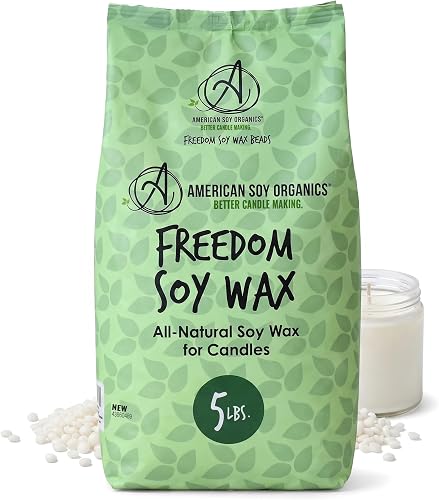 🫘 Waxes Soy wax Soy wax is the go-to natural wax for container candles: creamy, beginner-friendly and known for a slow, clean burn. See guide →
 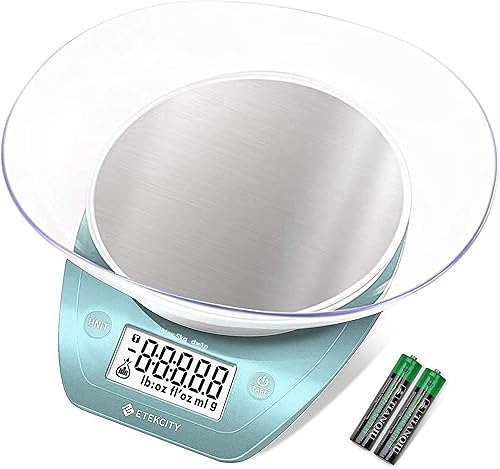 ⚖️ Tools Digital scale for candle making Candle making is done by weight, not by volume, so a simple digital scale is what turns a recipe into a candle you can repeat exactly. See guide →
  🌡️ Tools Candle thermometer A candle thermometer takes the guesswork out of melting, adding fragrance and pouring, and it is the single biggest upgrade to the look and scent throw of your candles. See guide →
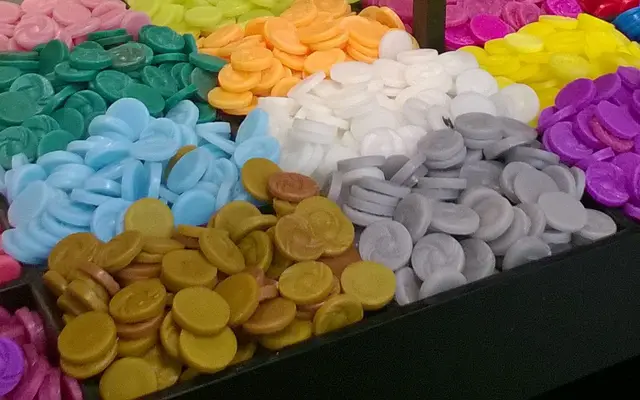
 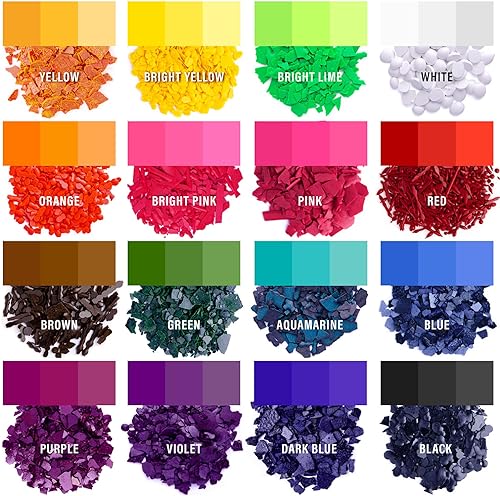 🎨 Dyes Candle dye chips Candle dye chips are concentrated oil-soluble colorants pressed into small chips: the easiest, cleanest way to color your wax. See guide →
  🫙 Containers Glass candle jars Empty glass candle jars are the classic home for container candles: they show off the wax, hold heat evenly and, if you pick the right glass, stay safe from the first light to the last. See guide →
 Frequently asked questions
What fragrance load should I use in soy wax?
Typically 6 to 10%, but your maximum is set by your wax and fragrance data sheets. Start around 8% and adjust after test burns.
Can I use diffuser oils in candles?
It’s not a good idea. They often contain solvents that don’t bind with wax and they aren’t formulated to burn.
Why doesn’t my candle smell?
Common causes are a low fragrance load, adding the oil when the wax was too hot, not enough cure time, or a wick too small to build a full melt pool.
At what temperature should I add fragrance oil?
Whatever your wax maker recommends; for soy it’s usually around 176–185 °F (80–85 °C). Never heat the fragrance oil by itself.
Do I need special labels if I sell candles?
Yes. Follow your fragrance supplier’s IFRA documentation and include standard candle safety warnings, such as never leaving a burning candle unattended.