🛈 As an Amazon Associate, CeraVelas earns from qualifying purchases. If you buy through our links, Amazon pays us a small commission at no extra cost to you. That’s how we keep the site running. How we choose.
📑 Contents
⚡ Our top picks: hTP wicks
Stock checked on October 6, 2026

Best hTP wicks in stock
HTP-104 Candle Making Wicks, Pre-Tabbed, Rigid, Self-Trimming Wicks for Candlemaking, Works with Paraffin…
HTP-62 Candle Making Wicks, Pre-Tabbed, Rigid, Self-Trimming Wicks for Candlemaking, Works with Paraffin, Gel…
HTP-93 Candle Making Wicks, Pre-Tabbed, Rigid, Self-Trimming Wicks for Candlemaking, Works with Paraffin, Gel…
EAP Innovations HTP-73 Candle Making Wicks, Pre-Tabbed, Rigid, Self-Trimming Wicks for Candlemaking, Works…
HTP-52 Candle Making Wicks, Pre-Tabbed, Rigid, Self-Trimming Wicks for Candlemaking, Works with Paraffin, Gel…
HTP-83 Candle Making Wicks, Pre-Tabbed, Rigid, Self-Trimming Wicks for Candlemaking, Works with Paraffin, Gel…
See more hTP wicks on Amazon →
CeraVelas score: combines the average rating and the number of customer reviews on Amazon.
What HTP wicks are
HTP is a series of flat-braided cotton wicks with paper threads woven in, like other self-trimming series, but constructed to draw viscous waxes more efficiently. Natural waxes such as soy, rapeseed and coconut, especially with a lot of fragrance, travel up a wick more slowly; HTP wicks make up for that sluggishness and keep the flame more consistent.
As they burn, the tip curls and is consumed at the edge of the flame, so the wick partly trims itself and mushrooms very little. That’s why they are a favorite for coconut wax candles, coconut-soy blends and soy candles with dense fragrances.
Sizes in the series
HTP numbering is a bit quirky: you’ll see codes like HTP 31, 41, 52, 62, 73, 83, 93, 104 or 1212. Don’t look for math behind it; just know that the number goes up as the wick gets thicker. Sizes 52–83 cover most household jars from about 2.4 to 3.1 inches (6–8 cm), and the larger ones are for wide or multi-wick vessels.
How to choose: HTP vs. other wicks
Reach for HTP when your wax is viscous, your fragrance load is high, or other flat wicks drown and tunnel. If your candle already burns well with ECO, there’s no need to switch. For sizing, start with the jar diameter and use the wick calculator, then confirm with test burns.
| Series | Flame style | Best with | Keep in mind |
|---|---|---|---|
| ECO | Calm and clean | Soy and rapeseed with moderate fragrance | Can be underpowered with dense fragrances |
| CD | A bit livelier | Soy, paraffin, blends | Easy to oversize |
| HTP | Strong and steady | Coconut, viscous blends, heavy fragrance | Confusing numbering |
| Wood | Wide, low, crackling | Coconut and soy in jars | Harder to dial in |
This comparison is general: every wick maker has its quirks and every formula behaves differently. The only reliable answer is a test burn with your wax, your fragrance and your jar.
How to use them
- Stick the tab to the center of the jar with a wick sticker.
- Straighten the wick and hold it with a centering device until the wax is completely set.
- Cure for the time your wax recommends; for soy and coconut, one to two weeks.
- Trim to about 1/4 inch (5–6 mm) and light it. Let the first burn go until the melt pool reaches the edge (usually 3–4 hours).
- Write down the melt pool width, flame height and any smoke or soot.
Common mistakes
- Using HTP in very fluid waxes without testing a smaller size. In paraffin they can produce too much flame.
- Mixing up the numbering. An HTP 73 doesn’t map to a specific ECO or CD size; you have to test.
- Sizing up to fix a weak scent. If the candle doesn’t smell, check your fragrance load and cure time first.
- Skipping the trim. Even though they partly self-trim, they burn best at 1/4 inch.
- Leaving a candle burning unattended during tests.
Telltale signs that an HTP wick might help: the flame shrinks and flickers after the first hour, the melt pool stalls short of the edge even though the wick looks big enough, or the wick drowns as the candle burns down. If you see any of these with a natural wax, an HTP test is worth a try.
Looking for alternatives? Compare them with CD wicks and read our guide to choosing a wick.
Pros and cons
👍 Pros
- ✓ Draws viscous waxes well
- ✓ Strong, steady flame
- ✓ Partly self-trimming with little soot
- ✓ Widely used for natural waxes
👎 Cons
- ✗ Confusing size numbers
- ✗ Can be too much in paraffin
- ✗ Not always easy to find in single sizes
- ✗ Need testing like any wick
How to use hTP wicks, step by step
- Measure the inside diameter of the jar.
- Pick a starting HTP size.
- Stick the tab in the center and center the wick.
- Pour and let it cure.
- Trim to 1/4 inch and run a 3–4 hour test burn.
- Adjust the size based on melt pool and flame.
Tips
- If your ECO wicks drown with a particular fragrance, try HTP in the same wax.
- Buy a sampler of 4–5 consecutive sizes.
- Label each test candle with the wick size on the bottom.
- Always compare using the same amount of wax and the same jar.
Projects with hTP wicks
Related supplies
 🧵 Wicks Cotton candle wicks Pre-tabbed, pre-waxed cotton wicks are where almost every homemade candle starts: inexpensive, reliable and available in dozens of sizes. See guide →
 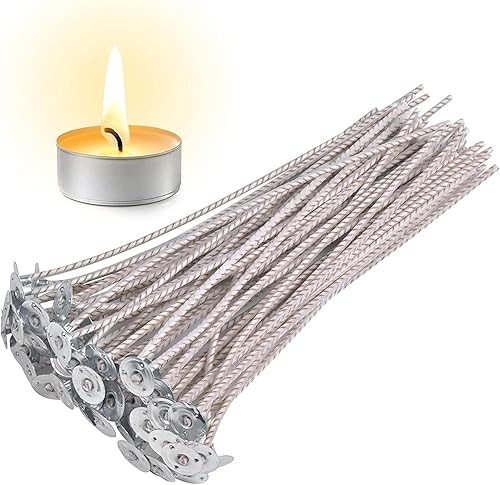 🕯️ Wicks CD wicks CD wicks are coreless, flat-braided cotton wicks that curl as they burn. They run a little hotter than ECO wicks and perform well in both soy and paraffin. See guide →
  🥥 Waxes Coconut wax Coconut wax is the wax behind many luxury candles: bright white, creamy and known for excellent cold and hot throw. See guide →
 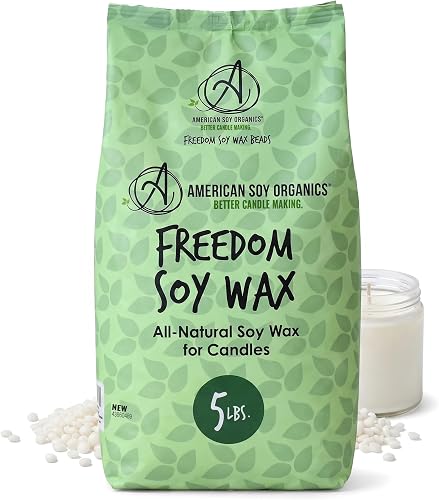 🫘 Waxes Soy wax Soy wax is the go-to natural wax for container candles: creamy, beginner-friendly and known for a slow, clean burn. See guide →
  🎯 Wicks Wick centering devices A wick centering device holds the top of the wick while the wax cools, so it sets straight and right in the middle of the jar. See guide →
  🏷️ Wicks Wick stickers Wick stickers are small double-sided adhesive dots that keep the wick tab stuck to the bottom of the jar while you pour your wax. See guide →
 Frequently asked questions
What does HTP stand for on wicks?
It’s the series’ trade name. What matters is that they’re flat wicks with paper threads, designed for viscous natural waxes.
What HTP size should I use for a 2.75-inch jar?
In soy or coconut, the mid sizes of the series (around HTP 62–73) are a typical starting point. Confirm with a test burn.
Are HTP wicks better than ECO?
Not better, just different. With thick waxes and lots of fragrance they often perform better; with simple formulas, ECO wicks work perfectly well.
Can I use HTP wicks in paraffin?
Yes, but paraffin is more fluid, so you’ll often need a smaller size to avoid an oversized flame.