🛈 As an Amazon Associate, CeraVelas earns from qualifying purchases. If you buy through our links, Amazon pays us a small commission at no extra cost to you. That’s how we keep the site running. How we choose.
📑 Contents
⚡ Our top picks: gel wax
Stock checked on October 6, 2026


Best gel wax in stock
TooGet Transparent Jelly Wax DIY Candle Making Gel Wax Handmade Material Crystal Gel Candle for Candle Making…
CoolCrafts 2 Pounds Transparent Gel Wax for Candle Making Clear Jelly Candle Wax for Decorative Projects
CoolCrafts 5 Pounds Transparent Gel Wax for Candle Making Clear Jelly Candle Wax for Decorative Projects
Heigble 9.9 lb High Density Transparent Gel Candle Wax Clear Gel Wax Jelly Candle 100 Pcs Wick and 100 Pcs…
Heigble 6.6 lb High Density Transparent Gel Candle Wax Clear Gel Wax Jelly Candle 100 Pcs Wick and 100 Pcs…
Heigble 3.3 lb Gel Wax for Candle Making Clear Jelly Gel Wax
CeraVelas score: combines the average rating and the number of customer reviews on Amazon.
What gel wax is
Despite the name, candle gel isn't a wax at all. It's mineral oil thickened with a polymer resin, such as the well-known Penreco (Calumet) Versagel. The result is a clear, rubbery, flexible material that burns for a long time and lets you see right through the candle.
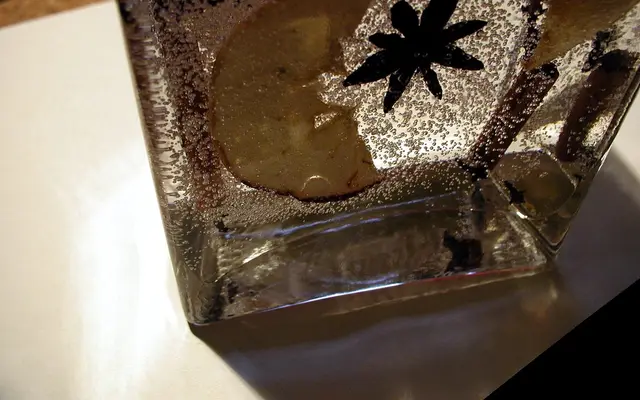
The appeal is all visual: candles that look like water, cocktails or aquariums, with seashells, stones or glass figurines suspended inside. In exchange, it behaves very differently from wax: it always goes in a container, it heats the glass more, and it won't work with just any fragrance oil.
Types and what to look for
Candle gel comes in three densities:
- Low density (LP): the clearest, but holds little fragrance and can't suspend embeds.
- Medium density (MP): the most common all-rounder for beginners.
- High density (HP): firmer; suspends embeds and holds a bit more fragrance.
Buy gel made specifically for candles, with a safety data sheet, and never substitute cosmetic or other gels.
Key data
| Property | Typical value |
|---|---|
| Composition | mineral oil + polymer resin |
| Liquefies at | 80–95 °C (176–203 °F) |
| Add fragrance at | 80–90 °C (176–194 °F) |
| Pour temperature | 75–90 °C (167–194 °F) |
| Max fragrance load | 3–5% (gel-compatible oils only) |
| Best for | container candles in thick glass |
| Common wicks | HTP or zinc-core, smaller than for wax |
| Approx. density | 0.86 g/ml |
| Vegan | Yes (mineral origin) |
Pros and cons
On the plus side: stunning clarity, a very long burn and decorative designs you simply can't make with wax. On the minus side: it only works in containers, scent throw is weak, fragrance oils must be gel-compatible, the glass gets quite hot, and it's the least forgiving material for mistakes.
How to work with it safely
Always use thick, heat-resistant glass candle jars; never plastic, thin glass or anything chipped or cracked. Cut the gel into chunks and melt it in a pouring pot or double boiler, watching your thermometer until it's fully liquid at 80–95 °C (176–203 °F). Don't overheat it: gel can smoke and is flammable. Warm the jar with a heat gun or in a low oven to cut down on bubbles. Add fragrance oil at 80–90 °C (176–194 °F), stir without whipping in air, and pour slowly down the side of a tilted jar at 75–90 °C (167–194 °F). Let it cool slowly at room temperature. See our gel candle project for a full walkthrough.
Wicks and fragrance
Gel burns hotter and feeds the flame generously, so it needs smaller wicks than wax: pre-tabbed HTP wicks or zinc-core wicks are standard. Never use wood wicks in gel. Your fragrance oil must be labeled gel-safe (non-polar, with a high flash point, ideally above about 170 °F / 77 °C). Oils with alcohol or water, and many essential oils, will cloud the gel or can be hazardous. Keep it to 3–5% and tint with liquid candle dye, one drop at a time.
Common problems and safety
- Bubbles: pour hotter into a warmed jar and cool slowly.
- Cloudy gel: incompatible fragrance or moisture on your embeds.
- Oil "sweating" on top: too much fragrance or a non-gel-safe oil.
- Flame too tall: the wick is too big; size down and trim it.
- Embeds: non-flammable only (glass, ceramic, shells), kept well away from the wick.
Never leave a gel candle burning unattended, put it out when about 1/2 inch of gel remains, and review our candle safety guide.
What gel wax is used for
- Clear candles in glassware
- Beach candles with shells and sand
- Faux cocktail and drink candles
- Decorative candles with suspended embeds
Pros and cons
👍 Pros
- ✓ Stunning transparency
- ✓ Very long burn time
- ✓ Can suspend decorative embeds
- ✓ Vivid color with very little dye
👎 Cons
- ✗ Only works in thick glass containers
- ✗ Weak scent throw
- ✗ Requires gel-compatible fragrance oils
- ✗ Heats the glass significantly
- ✗ More hazards if handled carelessly
How to use gel wax, step by step
- Choose a thick, heat-resistant glass jar.
- Stick a pre-tabbed HTP or zinc-core wick to the bottom and center it.
- Melt chunks of gel in a double boiler or pouring pot until fully liquid, 80–95 °C (176–203 °F).
- Warm the jar with a heat gun or in a low oven.
- Add gel-safe fragrance oil (3–5%) at 80–90 °C (176–194 °F) and stir without whipping.
- Place non-flammable embeds well away from the wick.
- Pour slowly down the side of the tilted jar at 75–90 °C (167–194 °F).
- Let it cool at room temperature and trim the wick to 1/4 inch.
Tips
- For few bubbles, pour hot and cool slowly; for lots of bubbles, pour cooler.
- Dry shells and stones thoroughly first, since moisture clouds the gel.
- Use a single drop of liquid dye; gel saturates fast.
- Test burn in the exact jar you'll use, because the glass matters.
- Extinguish the candle when about 1/2 inch of gel is left.
Projects with gel wax
Gel wax vs other waxes
- Gel wax vs Soy wax
- Gel wax vs Rapeseed wax
- Gel wax vs Coconut wax
- Gel wax vs Beeswax
- Gel wax vs Paraffin wax
- Gel wax vs Palm wax
- Gel wax vs Wax melt wax
- Gel wax vs Massage candle wax
- Gel wax vs Pillar candle wax
Related supplies
 🔥 Wicks HTP wicks HTP wicks are built for thick natural waxes and heavily scented formulas: a strong, steady flame, little soot and great ability to draw wax up. See guide →
  🧵 Wicks Cotton candle wicks Pre-tabbed, pre-waxed cotton wicks are where almost every homemade candle starts: inexpensive, reliable and available in dozens of sizes. See guide →
  🏷️ Wicks Wick stickers Wick stickers are small double-sided adhesive dots that keep the wick tab stuck to the bottom of the jar while you pour your wax. See guide →
  🫙 Containers Glass candle jars Empty glass candle jars are the classic home for container candles: they show off the wax, hold heat evenly and, if you pick the right glass, stay safe from the first light to the last. See guide →
  🌸 Fragrance oils Fragrance oils Candle fragrance oils are scent blends formulated to handle the heat of wax and fill a room with fragrance, both before and while the candle burns. See guide →
 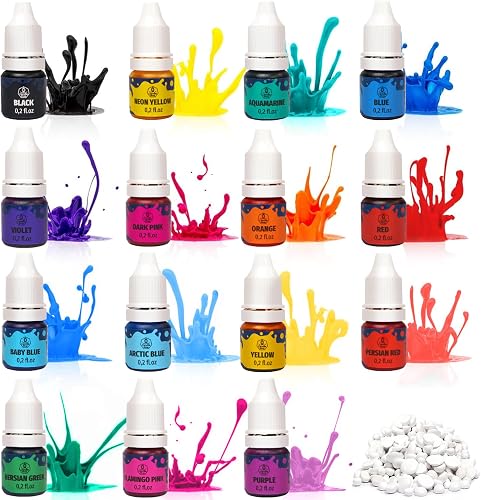 💧 Dyes Liquid candle dye Liquid candle dye is a concentrated colorant you add by the drop. It gives very precise colors and is the go-to for deep shades and gel candles. See guide →
 Frequently asked questions
Is gel wax real wax?
No. It's mineral oil thickened with a polymer resin. That's why it behaves differently: it's clear, always goes in a container and needs specific fragrance oils and wicks.
Can I use any fragrance oil in gel?
No. You need a gel-safe fragrance oil that's non-polar with a high flash point. Oils containing alcohol or water, and many essential oils, will cloud the gel or can be dangerous.
Why does my gel candle have so many bubbles?
Usually because the gel was poured too cool or into a cold jar. Warm the container, pour slowly and let it cool gradually.
What wick should I use for a gel candle?
A pre-tabbed HTP or zinc-core wick, smaller than you'd use in wax. Never use a wood wick in gel.
Are gel candles safe?
Yes, if you use thick glass, the right wick, gel-safe fragrance and non-flammable embeds. Never leave one burning unattended, and extinguish it before it burns all the way down.