🛈 As an Amazon Associate, CeraVelas earns from qualifying purchases. If you buy through our links, Amazon pays us a small commission at no extra cost to you. That’s how we keep the site running. How we choose.
📑 Contents
⚡ Our top picks: paraffin wax
Stock checked on October 6, 2026

Best paraffin wax in stock
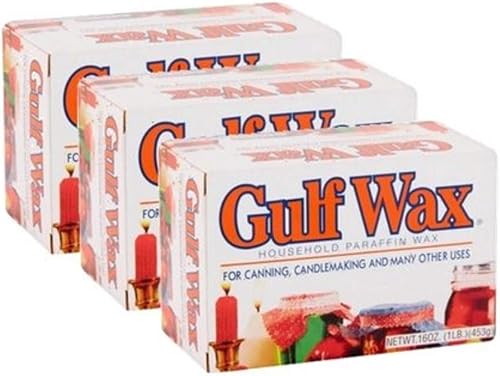
Gulf Wax Household Paraffin Wax 1 Pound Bars (3 Packs)
Fully Refined Paraffin Candle Wax Slab, 10 lb Bulk Wax for Candle Making

CARGEN 885g Paraffin Wax Pellets - Pure Beads for Candle Making and Crafts

Direct Candle Supply 2lb Paraffin Wax for Candle Making

Direct Candle Supply 3lb Paraffin Wax for Candle Making
See more paraffin wax on Amazon →
CeraVelas score: combines the average rating and the number of customer reviews on Amazon.
What paraffin wax is
Paraffin is a mineral wax produced during petroleum refining. For candles you want fully refined paraffin, with very low oil content, which is odorless, white and very stable. It was the industry-standard candle wax for decades and is still in a huge share of store-bought candles.
Its superpower is versatility: depending on the melt point, it works for container candles, votives, pillars, tapers or floating candles. It also throws fragrance powerfully and takes dye beautifully. The main drawback is that it's fossil-based, which is why many makers now prefer plant waxes.
Types and additives
Paraffin is sold mainly by melt point:
- Low melt (52–56 °C / 126–133 °F): container candles; good glass adhesion.
- Medium melt (56–60 °C / 133–140 °F): votives and general use.
- High melt (58–64 °C / 136–147 °F): pillars, tapers and floating candles that need to stand on their own.
It comes in slabs, pastilles or beads. Two classic additives: stearic acid (stearin, around 10%), which adds opacity and hardness and helps mold release, and Vybar, which in small amounts reduces mottling and helps hold fragrance. Paraffin-soy blends such as IGI 4630 are also popular in the US. For a ready-to-go pillar blend, see pillar candle wax.
Key data
| Property | Typical value |
|---|---|
| Melt point | 52–64 °C (126–147 °F), by grade |
| Add fragrance at | 80–85 °C (176–185 °F) |
| Pour temperature | 65–75 °C (149–167 °F) containers, 75–85 °C (167–185 °F) pillars |
| Max fragrance load | up to 10% |
| Best for | containers, pillars, votives, tea lights, floating candles, tapers |
| Common wicks | CD, HTP, flat braid |
| Cure time | 2–5 days |
| Approx. density | 0.90 g/ml |
| Vegan | Yes (mineral origin) |
Typical ranges; always check the manufacturer's spec sheet.
Pros and cons
The upside: it's inexpensive, easy to work with, forgiving, has excellent scent throw and gives vivid colors. It cures fast and pops out of molds with no fuss. The downside: it's petroleum-based and non-renewable, and an oversized or untrimmed wick will make it soot more. To weigh your options, read soy vs paraffin.
How to work with it
Melt paraffin in a double boiler or pouring pitcher, never over direct heat, since overheated wax is flammable. Using a thermometer, bring it to 80–85 °C (176–185 °F), add dye chips and fragrance oil, and stir for two minutes. Pour at 65–75 °C (149–167 °F) for containers or 75–85 °C (167–185 °F) for pillar molds. Paraffin shrinks as it cools and leaves a sinkhole by the wick: poke relief holes and top off with a second pour a few degrees hotter. Your candles are ready to burn after two to three days of cure.
Wicks and fragrance
Paraffin burns readily, so it usually needs slightly smaller wicks than soy. CD wicks and HTP wicks are the go-tos for containers; pillars and tapers use flat-braid or square-braid wicks. For fragrance, 6–8% already gives a strongly scented candle, and you can go up to 10% if your supplier allows it.
Common problems
- Sinkholes: normal as paraffin cools; fix with a second pour.
- Jump lines on the sides: cold mold or pouring too cool; warm the mold.
- Mottling: white spots from fragrance oil; add Vybar or lower the fragrance load.
- Air bubbles: pour slowly and tap the mold.
- Black smoke or mushrooming: trim to 1/4 inch or size down the wick.
Always review our candle safety guide, and never leave a burning candle unattended.
What paraffin wax is used for
- Pillar and votive candles
- Highly scented container candles
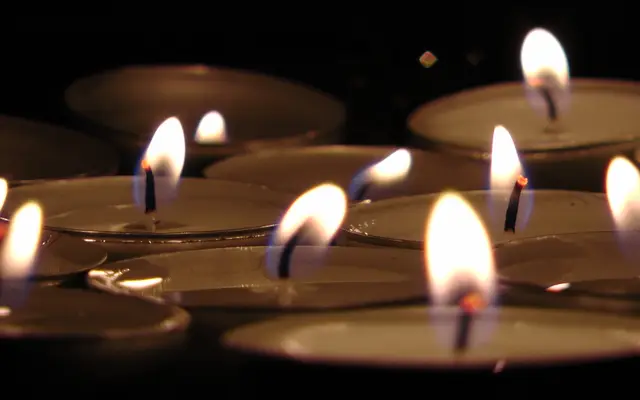
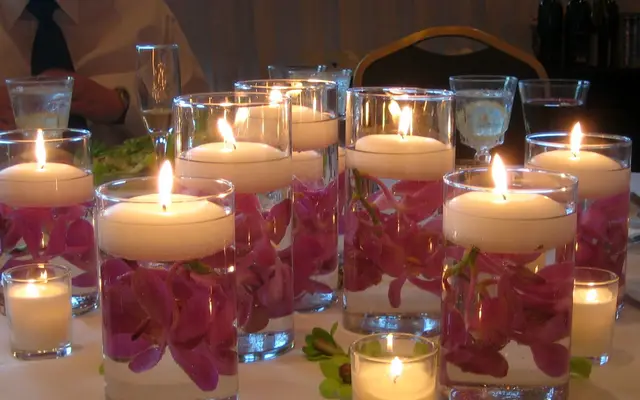
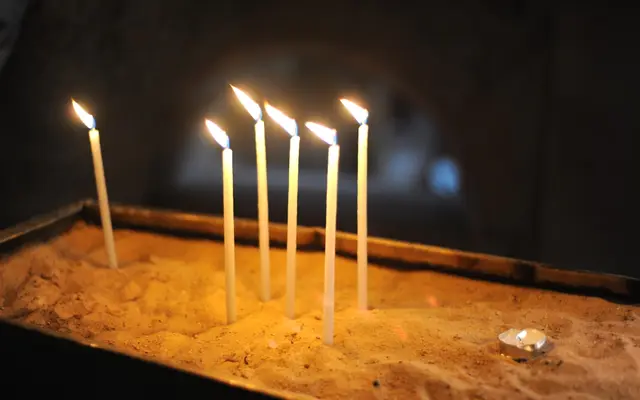
- Floating candles and tapers
- Brightly colored candles
- Tea lights
Pros and cons
👍 Pros
- ✓ Strongest scent throw
- ✓ Inexpensive and easy to find
- ✓ Vivid colors and a glossy finish
- ✓ Releases easily from molds
- ✓ Cures in a few days
👎 Cons
- ✗ Fossil-based and non-renewable
- ✗ More soot with the wrong wick
- ✗ Shrinks and forms sinkholes
- ✗ Less eco-friendly image
How to use paraffin wax, step by step
- Pick a paraffin with the melt point your candle type needs.
- Melt the paraffin in a double boiler, never over direct heat.
- Prep the jar or mold with a centered wick.
- At 80–85 °C (176–185 °F), add dye and fragrance oil (6–10%).
- Stir gently for two minutes.
- Pour at 65–75 °C (149–167 °F) for containers or 75–85 °C (167–185 °F) for pillars.
- Poke relief holes as it cools and do a second pour.
- Cure 2–5 days and trim the wick to 1/4 inch before lighting.
Tips
- Add about 10% stearic acid to pillar wax for hardness and easier release.
- Warm metal molds to prevent jump lines.
- Set aside some wax for the second pour.
- For bold, saturated colors, paraffin is your best friend.
- Run a test burn before selling or gifting.
Projects with paraffin wax
Paraffin wax vs other waxes
- Paraffin wax vs Soy wax
- Paraffin wax vs Rapeseed wax
- Paraffin wax vs Coconut wax
- Paraffin wax vs Beeswax
- Paraffin wax vs Palm wax
- Paraffin wax vs Gel wax
- Paraffin wax vs Wax melt wax
- Paraffin wax vs Massage candle wax
- Paraffin wax vs Pillar candle wax
Related supplies
 🧵 Wicks Cotton candle wicks Pre-tabbed, pre-waxed cotton wicks are where almost every homemade candle starts: inexpensive, reliable and available in dozens of sizes. See guide →
 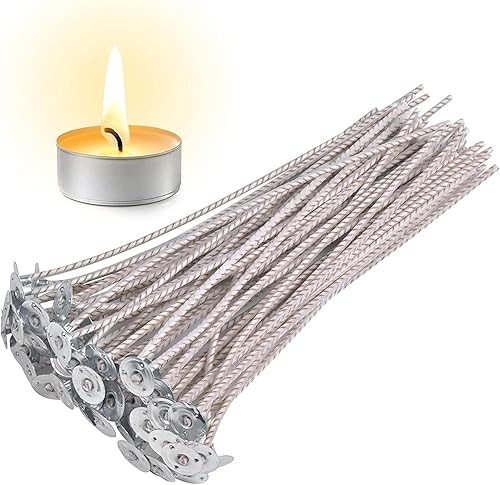 🕯️ Wicks CD wicks CD wicks are coreless, flat-braided cotton wicks that curl as they burn. They run a little hotter than ECO wicks and perform well in both soy and paraffin. See guide →
  🔥 Wicks HTP wicks HTP wicks are built for thick natural waxes and heavily scented formulas: a strong, steady flame, little soot and great ability to draw wax up. See guide →
  🕯️ Molds Silicone candle molds Silicone candle molds are the easiest way to make pillar and shaped candles at home: they flex, release cleanly and capture fine detail without any mold release spray. See guide →
  🌸 Fragrance oils Fragrance oils Candle fragrance oils are scent blends formulated to handle the heat of wax and fill a room with fragrance, both before and while the candle burns. See guide →
 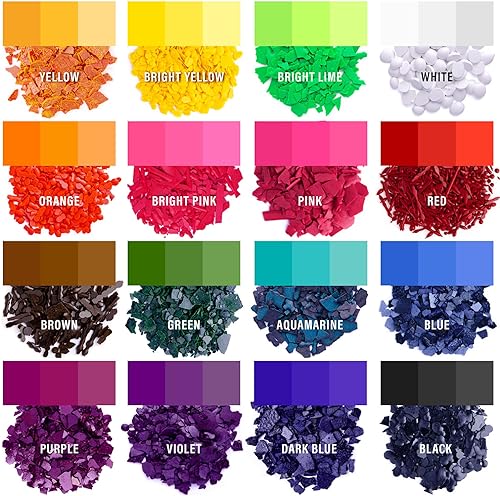 🎨 Dyes Candle dye chips Candle dye chips are concentrated oil-soluble colorants pressed into small chips: the easiest, cleanest way to color your wax. See guide →
 Frequently asked questions
Which paraffin should I buy for jar candles?
A low-melt paraffin (52–56 °C / 126–133 °F) or a dedicated container blend. It sticks to glass and lets the melt pool reach the edge of the jar.
What does stearic acid do?
It hardens paraffin, makes it more opaque, improves mold release and extends burn time in pillars. Most makers use around 10% of the wax weight.
Is paraffin wax toxic?
Fully refined candle-grade paraffin burns safely with the right, well-trimmed wick. Soot usually comes from oversized or long wicks. Ventilate the room and never leave a candle unattended.
Why does my paraffin candle have a hole in the middle?
Paraffin shrinks as it cools and forms a sinkhole near the wick. Poke relief holes and fill with a second pour of slightly hotter wax.