🛈 As an Amazon Associate, CeraVelas earns from qualifying purchases. If you buy through our links, Amazon pays us a small commission at no extra cost to you. That’s how we keep the site running. How we choose.
📑 Contents
⚡ Our top picks: pillar candle wax
Stock checked on October 6, 2026

Best pillar candle wax in stock
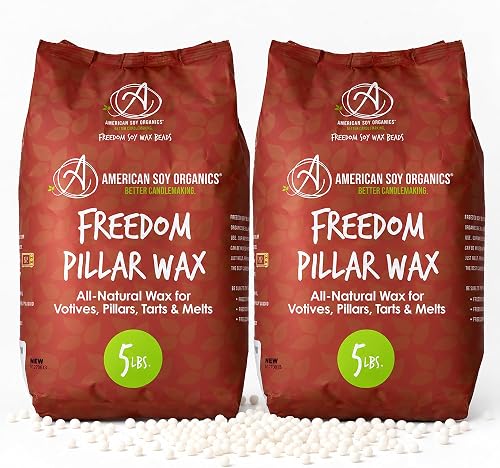
American Soy Organics Freedom Pillar Soy Wax Beads, Candle Wax, 5 lbs
American Soy Organics Freedom Pillar Soy Wax Beads, Candle Wax, 10 lbs

American Soy Organics Freedom Pillar Soy Wax Beads, Candle Wax, 1 lb
CANDWAX 3x3 Pillar Candles Set of 3 - Rustic Unscented No Drip Orange Candles for Home Decor, Parties…

Stonebriar Unscented Pillar Candles – 65 Hour Burn Time, Long-Lasting Wax Candles for Weddings, Holidays…

Stonebriar Unscented Pillar Candles – 18 Hour Burn Time, Long-Lasting Wax Candles for Weddings, Holidays…
See more pillar candle wax on Amazon →
CeraVelas score: combines the average rating and the number of customer reviews on Amazon.
What pillar wax is
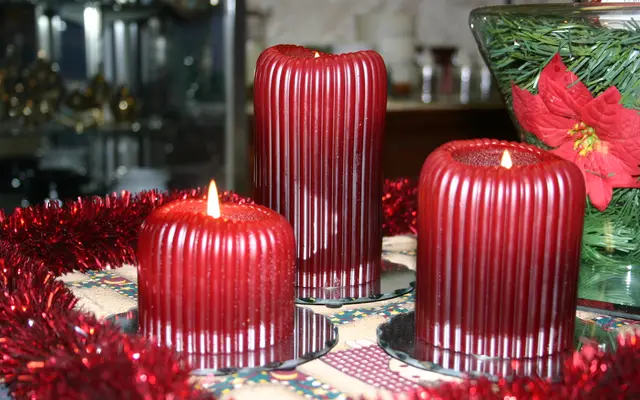
A pillar candle has no container holding it up, so its wax has to be hard enough to keep its shape, release cleanly from the mold and burn down while leaving a wall that holds in the melted wax. Soft, sticky container waxes just don't work: they slump, stick to the mold and drip.
Pillar waxes are usually soy-paraffin blends with a high melt point, high-melt paraffins with stearic acid, or soy waxes formulated specifically for pillars. They all share the same goals: firmness, good shrinkage for easy release and a slow burn.
Types and grades
- Pillar soy: such as Golden Brands 415, EcoSoya Pillar or KeraSoy Pillar & Melt; plant-based with a matte finish.
- Paraffin-soy blends: such as IGI 4630; paraffin's scent throw with soy's creaminess.
- High-melt paraffin: 58–64 °C (136–147 °F), usually with about 10% stearic acid for hardness and opacity.
Palm wax and beeswax also make great pillars, each with its own character. To compare, see paraffin vs pillar wax.
Key data
| Property | Typical value |
|---|---|
| Melt point | 57–65 °C (135–149 °F) |
| Add fragrance at | 80–88 °C (176–190 °F) |
| Pour temperature | 70–85 °C (158–185 °F) |
| Max fragrance load | up to 8% |
| Best for | pillars, votives, wax melts, floating candles |
| Common wicks | square- or flat-braid cotton, HTP |
| Cure time | 3 days (paraffin) to 2 weeks (soy blends) |
| Approx. density | 0.92 g/ml |
| Vegan | Yes |
Pros and cons
It lets you make freestanding candles with a professional look, it releases well, burns slowly and also works for votives, floating candles and wax melts. On the other hand, it shrinks as it cools and almost always needs a second pour, it requires molds and a bit more technique than a jar candle, and blends with paraffin aren't fully plant-based.
How to work with it
Set up your silicone or metal mold with the wick pulled taut and held straight with a wick centering bar. Melt the wax in a double boiler, bring it to 80–88 °C (176–190 °F), add fragrance oil and dye, and stir for two minutes. Pour at 70–85 °C (158–185 °F); warm metal molds first to avoid jump lines. Once a skin forms on top, poke a few relief holes near the wick to release trapped air and prevent hidden cavities. As it cools, a sinkhole will form: fill it with a second pour a few degrees hotter. Unmold once completely cold and let the candle cure.
Wicks and fragrance
In a pillar, the wick should melt a pool that leaves an outer wall a few millimeters thick, the so-called lantern or hurricane effect. Too big a wick and the candle drips and slumps; too small and it drowns. For 2–3 inch (5–8 cm) pillars, square- or flat-braid cotton and HTP wicks are standard, sized by diameter; our wick calculator gives you a starting point to confirm with a test burn. Keep fragrance at 8% or less; more can soften the wax and cause sweating.
Common problems
- Sinkholes and cavities: poke relief holes and do a second pour.
- Cracks: cooled too fast; avoid drafts and skip the fridge.
- Jump lines: cold mold or cool pour; warm the mold.
- Won't release: wait until it's fully cold; for rigid molds, a few minutes in the fridge helps.
- Dripping or drowning: adjust the wick size.
Find the full walkthrough in our pillar candle project.
What pillar candle wax is used for
- Pillar candles
- Votives
- Floating candles
- Firm wax melts
- Colorful decorative candles
Pros and cons
👍 Pros
- ✓ Stands on its own without a container
- ✓ Releases easily from molds
- ✓ Slow burn
- ✓ Professional finish
- ✓ Very versatile
👎 Cons
- ✗ Shrinks and needs a second pour
- ✗ Requires molds and more technique
- ✗ Paraffin blends aren't 100% plant-based
- ✗ Wick sizing takes testing
How to use pillar candle wax, step by step
- Set up the mold with the wick taut and centered.
- Melt the wax in a double boiler to 80–88 °C (176–190 °F).
- Add fragrance oil (up to 8%) and dye, and stir for two minutes.
- Warm metal molds to avoid jump lines.
- Pour at 70–85 °C (158–185 °F).
- Poke relief holes near the wick once a skin forms.
- Fill the sinkhole with a slightly hotter second pour.
- Unmold when cold, trim the wick to 1/4 inch and let it cure.
Tips
- Always hold back 10–15% of your wax for the second pour.
- Use a wick centering bar so the wick stays straight.
- If a rigid mold won't release, a few minutes in the fridge helps.
- Burn pillars on a heat-resistant plate or tray.
- Run multi-hour test burns to choose the right wick size.
Projects with pillar candle wax

Pillar candle wax vs other waxes
- Pillar candle wax vs Soy wax
- Pillar candle wax vs Rapeseed wax
- Pillar candle wax vs Coconut wax
- Pillar candle wax vs Beeswax
- Pillar candle wax vs Paraffin wax
- Pillar candle wax vs Palm wax
- Pillar candle wax vs Gel wax
- Pillar candle wax vs Wax melt wax
- Pillar candle wax vs Massage candle wax
Related supplies
 🕯️ Molds Silicone candle molds Silicone candle molds are the easiest way to make pillar and shaped candles at home: they flex, release cleanly and capture fine detail without any mold release spray. See guide →
  🧵 Wicks Cotton candle wicks Pre-tabbed, pre-waxed cotton wicks are where almost every homemade candle starts: inexpensive, reliable and available in dozens of sizes. See guide →
  🔥 Wicks HTP wicks HTP wicks are built for thick natural waxes and heavily scented formulas: a strong, steady flame, little soot and great ability to draw wax up. See guide →
  🎯 Wicks Wick centering devices A wick centering device holds the top of the wick while the wax cools, so it sets straight and right in the middle of the jar. See guide →
 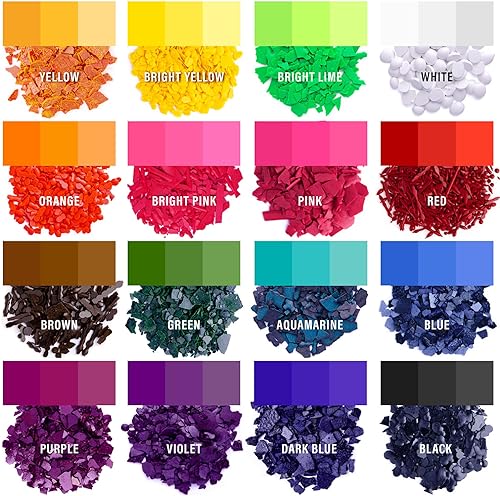 🎨 Dyes Candle dye chips Candle dye chips are concentrated oil-soluble colorants pressed into small chips: the easiest, cleanest way to color your wax. See guide →
  🌸 Fragrance oils Fragrance oils Candle fragrance oils are scent blends formulated to handle the heat of wax and fill a room with fragrance, both before and while the candle burns. See guide →
 Frequently asked questions
Can I make pillar candles with regular soy wax?
Not with container soy, which is soft and slumps. You need a pillar soy such as Golden Brands 415, or a soy-paraffin pillar blend.
Why does a hole form in the middle of my pillar?
Wax shrinks as it cools and forms a sinkhole near the wick. It's completely normal: poke relief holes and fill it with a second pour.
What wick does a pillar candle need?
Usually square- or flat-braid cotton wicks, or HTP, sized to the diameter. The goal is a candle that leaves an outer wall without dripping; confirm with a test burn.
Do I need mold release?
Usually not with silicone molds. In metal or polycarbonate molds, a wax with good shrinkage is often enough, though a little mold release spray makes life easier.