🛈 As an Amazon Associate, CeraVelas earns from qualifying purchases. If you buy through our links, Amazon pays us a small commission at no extra cost to you. That’s how we keep the site running. How we choose.
📑 Contents
⚡ Our top picks: palm wax
Stock checked on October 6, 2026

Best palm wax in stock
ORGANIC PALM KERNEL OIL FLAKES (1 lbs / 16 oz) Non-GMO; Premium Cosmetic Grade Palm Kernel Oil Flakes for…
ALEXES Palm Wax for Candle Making - 1 lb Palm Wax Flakes
CeraVelas score: combines the average rating and the number of customer reviews on Amazon.
What palm wax is
Palm wax is made by hydrogenating palm oil. Unlike soy or coconut, it's a hard, brittle plant wax with a high melt point that stands on its own without a container. That makes it one of the few natural waxes that really works for pillars and votives.
Its signature trait is crystallization: some grades form crystal patterns as they cool that look like feathers, snowflakes or frost. It's a gorgeous decorative effect you simply can't get from any other wax.
Types and what to look for
- Feather or crystal palm: grows large crystals when poured hot and cooled slowly.
- Smooth or matte palm: an even finish for pillars and votives without the crystal effect.
- Container palm: softer and less common.
Palm oil has a serious environmental footprint when farming drives deforestation, so buy wax that's RSPO certified (sustainable palm) and skip listings that don't say where it comes from. If sustainability matters to you, check our eco-friendly candle guide.
Key data
| Property | Typical value |
|---|---|
| Melt point | 56–62 °C (133–144 °F) |
| Add fragrance at | 80–90 °C (176–194 °F) |
| Pour temperature | 85–95 °C (185–203 °F) for crystals |
| Max fragrance load | up to 8% |
| Best for | pillars, votives, some containers |
| Common wicks | flat- or square-braid cotton, HTP |
| Approx. density | 0.92 g/ml |
| Vegan | Yes |
Typical values; each manufacturer lists its own.
Pros and cons
It's hard, it releases from molds on its own because it shrinks as it cools, it burns slowly and steadily, and it creates one-of-a-kind crystal finishes. It's plant-based and vegan. On the other hand, you need to buy certified wax, scent throw is moderate, it's brittle, and the crystal effect takes practice. Torn between palm and soy? Read palm vs soy.
How to work with it
Melt the wax in a double boiler and bring it up to 85–95 °C (185–203 °F), hotter than most waxes, because a hot pour is what lets the crystals grow. Add fragrance oil at 80–90 °C (176–194 °F), making sure its flash point allows it, and stir for two minutes. Pour into a room-temperature or slightly warmed mold, such as a silicone pillar mold, and let it cool slowly, away from drafts. The slower it cools, the bigger the crystals. Top off any sinkhole with a second pour and unmold only when the candle is completely cold.
Wicks and fragrance
Flat- or square-braid cotton wicks and HTP wicks work well in palm pillars. Because palm is hard, it sometimes needs one size up from paraffin at the same diameter, so confirm with a test burn. Keep fragrance at 8% or less: too much oil or dye stops the crystals from forming. If you add color, use a light hand so you don't hide the pattern.
Common problems
- No crystal pattern: poured too cool, cold mold, or too much fragrance or dye.
- Cracks: cooled too fast; insulate the mold with a towel.
- Sinkhole by the wick: do a second pour.
- Crumbling candles: palm is brittle; handle gently and never cool it in the fridge.
- Uneven top: smooth it with a heat gun.
Ready to start? Try our pillar candle project, or use pillar wax if you want a smooth finish.
What palm wax is used for
- Pillar candles with a crystal finish
- Votives
- Decorative candles with feather or frost patterns
- Freestanding plant-based candles
Pros and cons
👍 Pros
- ✓ Hard plant wax that works for pillars
- ✓ Unique crystal patterns
- ✓ Releases easily from molds
- ✓ Slow, steady burn
- ✓ Vegan
👎 Cons
- ✗ Needs RSPO certification to be sustainable
- ✗ Moderate scent throw
- ✗ Brittle
- ✗ Crystal effect takes practice
How to use palm wax, step by step
- Choose RSPO-certified palm wax, crystal or smooth depending on the look you want.
- Melt the wax in a double boiler to 85–95 °C (185–203 °F).
- Set up the mold with the wick centered and taut.
- Add fragrance oil (8% max) at 80–90 °C (176–194 °F) and stir for two minutes.
- Pour hot into a room-temperature mold.
- Let it cool very slowly, wrapping the mold in a towel if needed.
- Fill the sinkhole with a second pour.
- Unmold when cold and trim the wick to 1/4 inch.
Tips
- For big crystals, pour hot and cool slowly.
- Go easy on dye; light colors show off the pattern best.
- Check your fragrance oil's flash point before adding it this hot.
- Store finished candles where they won't get knocked; palm is brittle.
- Practice in small molds before going big.
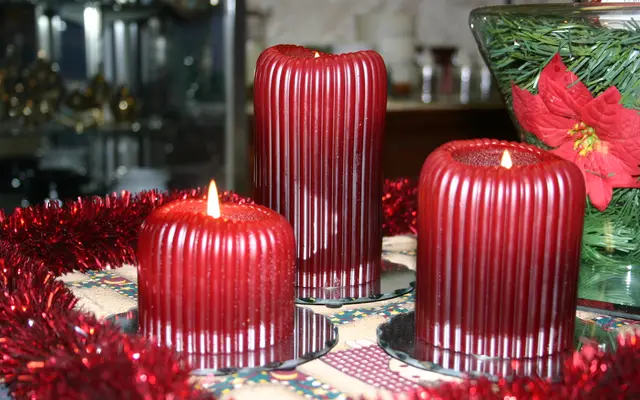
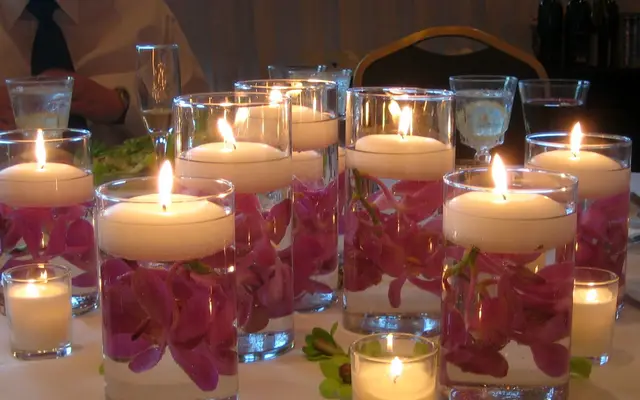
Projects with palm wax
Palm wax vs other waxes
- Palm wax vs Soy wax
- Palm wax vs Rapeseed wax
- Palm wax vs Coconut wax
- Palm wax vs Beeswax
- Palm wax vs Paraffin wax
- Palm wax vs Gel wax
- Palm wax vs Wax melt wax
- Palm wax vs Massage candle wax
- Palm wax vs Pillar candle wax
Related supplies
 🧵 Wicks Cotton candle wicks Pre-tabbed, pre-waxed cotton wicks are where almost every homemade candle starts: inexpensive, reliable and available in dozens of sizes. See guide →
  🔥 Wicks HTP wicks HTP wicks are built for thick natural waxes and heavily scented formulas: a strong, steady flame, little soot and great ability to draw wax up. See guide →
  🕯️ Molds Silicone candle molds Silicone candle molds are the easiest way to make pillar and shaped candles at home: they flex, release cleanly and capture fine detail without any mold release spray. See guide →
  🌸 Fragrance oils Fragrance oils Candle fragrance oils are scent blends formulated to handle the heat of wax and fill a room with fragrance, both before and while the candle burns. See guide →
 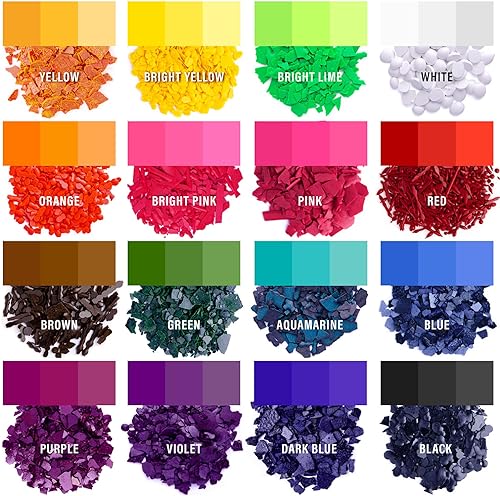 🎨 Dyes Candle dye chips Candle dye chips are concentrated oil-soluble colorants pressed into small chips: the easiest, cleanest way to color your wax. See guide →
  🔥 Tools Heat gun for candles A heat gun is the candle maker's eraser: a few seconds of hot air smooths bumpy tops, closes small holes and warms jars so the wax sticks properly. See guide →
 Frequently asked questions
Is palm wax sustainable?
It depends on the source. Always buy RSPO-certified palm wax, which supports more responsible farming. If a listing doesn't say where the wax comes from, choose a different plant wax.
How do I get the feather or frost pattern?
Use crystal palm wax, pour it hot (85–95 °C / 185–203 °F) into a room-temperature mold and let it cool slowly. Too much fragrance or dye and cold molds prevent the effect.
Can I use palm wax in jars?
Container palm waxes exist but are less common. Classic palm wax is hard and designed for pillars and votives.
How much fragrance oil can palm wax hold?
Up to 8% at most. More fragrance can stop crystallization and make the candle sweat.