🛈 As an Amazon Associate, CeraVelas earns from qualifying purchases. If you buy through our links, Amazon pays us a small commission at no extra cost to you. That’s how we keep the site running. How we choose.
📑 Contents
⚡ Our top picks: beeswax
Stock checked on October 6, 2026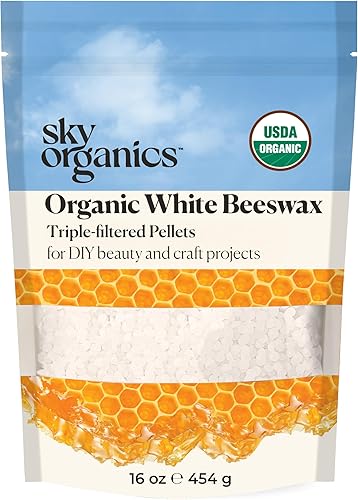

Best beeswax in stock
Sky Organics Organic White Beeswax Pellets 16oz, DIY Beauty, USDA Organic

Meyer's Pure Domestic USA Beeswax, Not Imported, Additive Free Triple Filtered Pellets for All Your Do It…

VIPwax White Beeswax Pellets 1LB, Natural Organic Beeswax for Candle Making
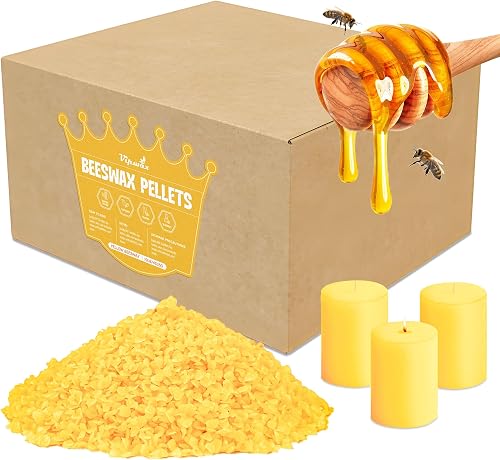
VIPwax Yellow Beeswax Pellets 10LB(4530g), Natural Organic Beeswax

White Beeswax Pellets 5LB(2265g), Natural Organic Beeswax
Beeswax Pellets 10LB Beewax Triple Filtered Beeswax Pastilles for Candle Making Great for DIY Projects (10LB)
CeraVelas score: combines the average rating and the number of customer reviews on Amazon.
What beeswax is
Beeswax is made by honeybees to build their comb. After the honey harvest, beekeepers melt down the cappings and old comb, filter the wax and cast it into blocks or pellets. It's the oldest candle wax there is and still one of the most prized: hard, dense, with a high melt point and a slow, bright burn.
Its natural honey scent is a big part of the appeal, so many beeswax candles are left unscented. It isn't vegan, and it costs noticeably more than other waxes, but a well-made beeswax candle lasts a remarkably long time.
Types and what to look for
- Yellow (natural): keeps its golden color and honey aroma. The most traditional choice.
- White: filtered or bleached; nearly odorless, better for coloring or scenting.
- Pellets (pastilles): far easier to weigh and melt than solid blocks.
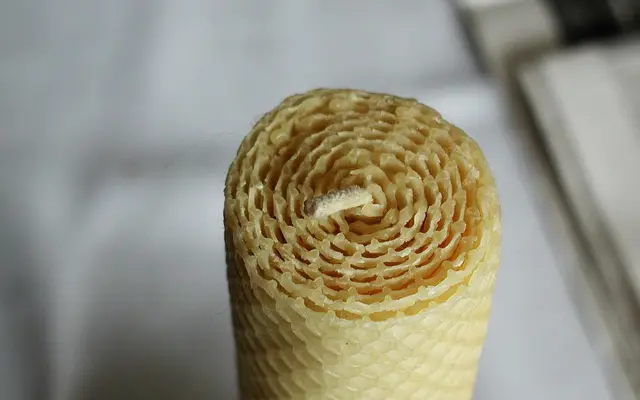
- Honeycomb sheets: for no-melt rolled beeswax candles.
Look for 100% pure beeswax, cosmetic grade or from a trusted beekeeper. Be wary of bargain prices: some "beeswax" is cut with paraffin. If you're just starting out, a beeswax candle kit comes with pre-measured wax and wicks.
Key data
| Property | Typical value |
|---|---|
| Melt point | 62–65 °C (144–149 °F) |
| Add essential oils at | 70–75 °C (158–167 °F) |
| Pour temperature | 68–77 °C (154–171 °F) |
| Max fragrance load | up to 6% (limited throw) |
| Best for | pillars, tapers, votives, tea lights, containers |
| Common wicks | square-braid cotton, HTP |
| Approx. density | 0.96 g/ml |
| Vegan | No |
Typical values; natural beeswax varies by source.
Pros and cons
No wax lasts longer: thanks to its hardness and density, a beeswax candle burns far longer than a soy candle of the same size, with a bright, warm flame. It needs no additives, releases easily from molds and smells lovely. The downsides: it's expensive, it isn't vegan, scenting it is hit-or-miss, and in jars it tends to tunnel. For a side-by-side look, see beeswax vs soy.
How to work with it
Always melt beeswax in a double boiler or pouring pitcher, never over direct heat, and keep an eye on your thermometer: above 85 °C (185 °F) it darkens and loses its aroma. Once it's melted at about 70–75 °C (158–167 °F), stir in essential oils if you're using them and pour between 68 and 77 °C (154–171 °F). Beeswax shrinks as it cools in a mold, so save a little to top up the well that forms around the wick. Let it cool slowly at room temperature to prevent cracks, and only unmold once it's completely cold.
Wicks and fragrance
Beeswax is dense and sticky, so it needs a bigger wick than paraffin or soy. Square-braid cotton wicks are the classic choice for pillars and tapers, while HTP wicks work well in containers. For a 2-inch (5–6 cm) pillar, start with a medium square-braid wick and adjust after a test burn. As for scent, manage your expectations: beeswax has a modest throw. If you want to scent it, use essential oils at 3–6% max.
Common problems
- Tunneling in jars: size up the wick or blend in 10–30% coconut oil to soften the wax.
- White bloom: totally natural; buff it off with a soft cloth or a little warm air.
- Cracks: the candle cooled too fast; let it cool at room temperature.
- Sinkhole by the wick: fill it with a second pour.
- Wick drowning: the wick is too small for such a dense wax; go up a size.
Find more ideas in our beeswax candle project and taper candle molds.
What beeswax is used for
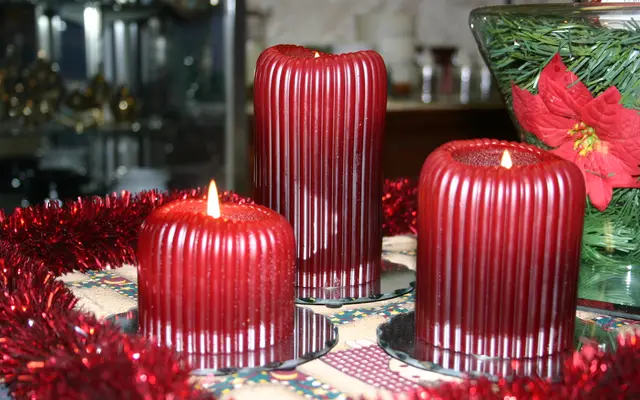
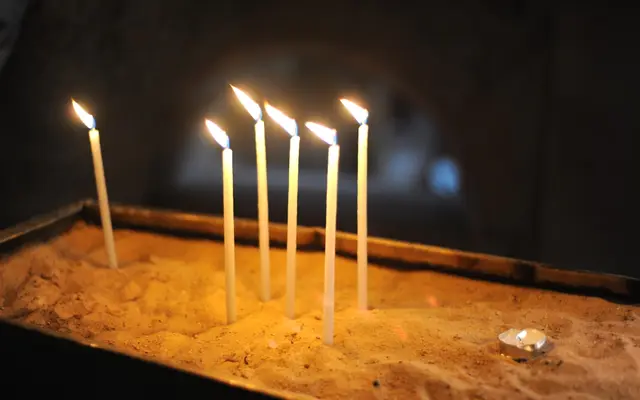
- Pillar and taper candles
- Rolled candles from honeycomb sheets
- Tea lights and votives
- Container candles (with the right wick)
- Natural unscented candles
Pros and cons
👍 Pros
- ✓ Very long, bright burn
- ✓ Natural honey aroma
- ✓ 100% natural with no additives
- ✓ Hard and releases easily from molds
- ✓ Ideal for tapers and pillars
👎 Cons
- ✗ Expensive
- ✗ Not vegan
- ✗ Weak fragrance throw
- ✗ Tends to tunnel in containers
How to use beeswax, step by step
- Weigh your beeswax pellets: a pillar needs roughly its volume in ml times 0.96 in grams.
- Melt the wax in a double boiler, never above 85 °C (185 °F).
- Set up your mold with the wick centered and pulled taut.
- If using essential oils, add them at 70–75 °C (158–167 °F), 6% max.
- Pour between 68 and 77 °C (154–171 °F).
- Let it cool slowly at room temperature.
- Top up the well around the wick with a second pour.
- Unmold once fully cold and trim the wick to 1/4 inch.
Tips
- Pellets weigh out and melt much faster than blocks.
- Don't overheat beeswax; it darkens and loses its scent.
- Keep some melted wax aside for the second pour.
- Clean tools while they're still warm; cold beeswax sticks to everything.
- If bloom appears, buff it with a cotton cloth.
Projects with beeswax
Beeswax vs other waxes
- Beeswax vs Soy wax
- Beeswax vs Rapeseed wax
- Beeswax vs Coconut wax
- Beeswax vs Paraffin wax
- Beeswax vs Palm wax
- Beeswax vs Gel wax
- Beeswax vs Wax melt wax
- Beeswax vs Massage candle wax
- Beeswax vs Pillar candle wax
Related supplies
 🧵 Wicks Cotton candle wicks Pre-tabbed, pre-waxed cotton wicks are where almost every homemade candle starts: inexpensive, reliable and available in dozens of sizes. See guide →
  🔥 Wicks HTP wicks HTP wicks are built for thick natural waxes and heavily scented formulas: a strong, steady flame, little soot and great ability to draw wax up. See guide →
  🕯️ Molds Silicone candle molds Silicone candle molds are the easiest way to make pillar and shaped candles at home: they flex, release cleanly and capture fine detail without any mold release spray. See guide →
  🕯️ Molds Taper candle molds Taper candle molds let you pour tall, slim dinner candles that fit standard candlesticks, without spending an afternoon hand-dipping. See guide →
 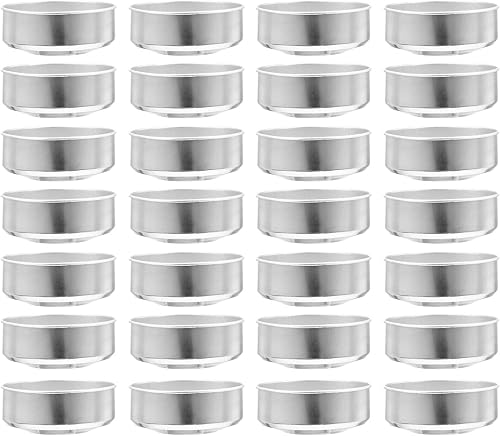 🫖 Molds Tealight cups Empty tealight cups are the small aluminum or clear plastic shells you fill with wax to make your own tealights, an easy way to use up leftover wax or make scented mini candles. See guide →
  🫕 Tools Candle pouring pitcher A candle pouring pitcher is the one tool every candle maker uses on every single batch: you melt the wax in it, stir in the fragrance and pour straight into your jars without a mess. See guide →
 Frequently asked questions
Should I use yellow or white beeswax?
Yellow beeswax keeps its natural color and honey scent. White beeswax is filtered or bleached, nearly odorless, and better if you want to color or scent your candles.
Can you add fragrance to beeswax?
Yes, but beeswax has a weak throw and its own honey aroma competes with added scents. Use essential oils at 3–6% max and pick notes that pair well with honey.
What size wick does beeswax need?
A larger wick than other waxes, usually square-braid cotton for pillars and tapers or HTP for containers. Always run a test burn to dial in the size.
What is the white film on beeswax candles?
It's called bloom, and it's a sign of pure beeswax. It doesn't affect the burn and buffs off with a soft cloth or a bit of warm air.
Why is my beeswax candle cracking?
Almost always because it cooled too quickly. Let it cool at room temperature, away from windows, and never put it in the fridge.