🛈 As an Amazon Associate, CeraVelas earns from qualifying purchases. If you buy through our links, Amazon pays us a small commission at no extra cost to you. That’s how we keep the site running. How we choose.
📑 Contents
⚡ Our top picks: concrete candle vessels
Stock checked on October 6, 2026


Best concrete candle vessels in stock
Wehous Large Candle Holder Silicone Molds, Irregular Candle Vessels Bowl Container Resin Concrete Mold…

Wehous Round Concrete Candle Jar Mold Silicone Epoxy Resin Mold Trinket Box Container Storage Mould for…
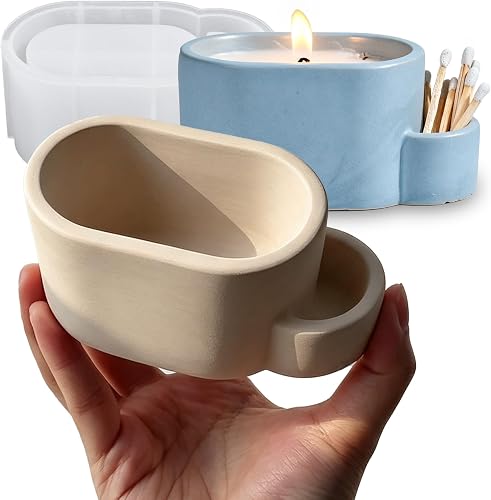
Wehous Oval Candle Holder Mold with Match Holder, Unique Storage Resin Concrete Molds Candle Vessels Jewelry…
Wehous 2PCS Round Candle Holder Molds, Striped Storage Box Jar Plant Pot Silicone Molds for Epoxy Resin…
Wehous Large Candle Holder Silicone Resin Concrete Cement Mold, Unique Candle Vessels Jewelry Holder Round…

Wehous Large Silicone Bowl Molds, 7.2'' Round Container Resin Concrete Mold for Bowls, Silicone Molds for…
See more concrete candle vessels on Amazon →
CeraVelas score: combines the average rating and the number of customer reviews on Amazon.
What concrete vessels are
Concrete candle vessels are containers cast from cement, concrete or similar mineral materials such as jesmonite or terrazzo. They are popular for modern, Scandinavian and industrial-style candles. Their weight makes them stable, they come in many natural tones, and once the candle is finished they can be reused as planters, pen holders or trays.
The main difference from glass is porosity. Raw concrete absorbs oils, so an unsealed vessel can soak up wax and fragrance and develop dark stains or even leak through the walls. Good vessels made for candles are sealed inside with a heat-resistant coating. They pair well with soy wax and coconut wax and look great with a wooden wick.
What to look for when buying
- Sealed interior. The listing should say the inside is sealed or waterproofed for candles. If not, you will need to seal it yourself with a product rated for heat.
- Wall thickness. Thick walls insulate better and prevent hot spots. Avoid very thin, lightweight vessels.
- Smooth, flat base. A cork or felt pad underneath protects furniture.
- Shape. Wide, straight vessels burn most evenly. Bowls with a narrow top or very deep shapes are harder to wick.
- Finish and color. Natural gray, white, terracotta and terrazzo flecks are common. Remember that oil stains show most on light colors.
- Lids. Some vessels come with wooden or concrete lids, which are handy for curing and gifting.
Common sizes
Concrete vessels often have thicker walls, so the inside diameter can be much smaller than the outside. Always measure inside and check the wick calculator.
| Size | Typical inside diameter | Approx. wax | Notes |
|---|---|---|---|
| Small (about 4 oz / 120 ml) | 2–2.4 in (5–6 cm) | 3 oz (85 g) | Minis, gifts, tests |
| Medium (about 7 oz / 200 ml) | 2.8–3.1 in (7–8 cm) | 5–6 oz (140–170 g) | Most common size |
| Large (about 12 oz / 350 ml) | 3.5–4 in (9–10 cm) | 9–10 oz (260–290 g) | Often needs two wicks |
| Bowl (wide and shallow) | 4.5 in+ (12 cm+) | varies | Multiple wicks, test carefully |
How to use and clean them
Dust off the vessel with a dry cloth. If it is unsealed, apply a heat-resistant sealant inside and let it cure fully according to the product instructions. A simple test: put a drop of oil on the inside; if it soaks in quickly, it needs sealing.
Fix the wick with wick stickers, warm the vessel slightly (concrete holds cold for a long time), and pour at your wax's recommended temperature. Concrete keeps heat longer than glass, so the candle cools slowly, which is good for a smooth top. Keep fragrance load within the supplier's maximum; excess oil is more likely to seep into the walls. Our fragrance load guide explains how to calculate it.
To reuse, warm the outside gently with a heat gun or set it in the freezer, remove leftover wax, and wipe the inside with a paper towel. Avoid soaking concrete in water; wipe it with a damp cloth and let it dry completely.
Safety
- Use only vessels that are sealed and free of cracks.
- Burn on a heat-resistant surface; the base can get warm.
- Stop when about 1/2 in (1 cm) of wax remains.
- Keep wicks trimmed and never leave a burning candle unattended.
- Test burn every new vessel shape with your wax, wick and fragrance before gifting or selling.
Common mistakes
- Pouring into unsealed concrete. Oil stains and leaks are almost guaranteed.
- Measuring the outside diameter. Thick walls make the inside much smaller.
- Pouring into a cold vessel. Wax can pull away or crack on the surface.
- Overloading fragrance. More oil means more chance of seepage.
- Washing with lots of water. Concrete absorbs moisture, which affects the next pour.
Pros and cons
👍 Pros
- ✓ Modern, natural look in many tones
- ✓ Heavy and stable, hard to knock over
- ✓ Holds heat for slow cooling and smooth tops
- ✓ Easy to reuse once the candle is finished
👎 Cons
- ✗ Needs a sealed interior to avoid stains and leaks
- ✗ Heavy and more expensive to ship
- ✗ Cannot be soaked or put in a dishwasher
- ✗ Thick walls reduce the usable volume
How to use concrete candle vessels, step by step
- Check whether the inside is sealed with a drop of oil.
- Seal it with a heat-resistant product if needed and let it cure.
- Measure the inside diameter and choose your wick.
- Attach the wick with a wick sticker and warm the vessel slightly.
- Pour your wax at the recommended temperature.
- Let it cool, cure and do a full test burn.
Tips
- Add a cork or felt pad to the base to protect furniture.
- Light-colored concrete shows stains most, so seal it well.
- Wooden wicks suit the modern look.
- Keep fragrance load moderate and within the datasheet maximum.
- Store empty vessels dry to keep them ready for pouring.
Projects with concrete candle vessels
Related supplies
 🫘 Waxes Soy wax Soy wax is the go-to natural wax for container candles: creamy, beginner-friendly and known for a slow, clean burn. See guide →
  🥥 Waxes Coconut wax Coconut wax is the wax behind many luxury candles: bright white, creamy and known for excellent cold and hot throw. See guide →
  🪵 Wicks Wooden wicks Wooden wicks give a candle a wide, low flame and that soft fireplace crackle. They look gorgeous, but they are pickier than cotton wicks. See guide →
  🏷️ Wicks Wick stickers Wick stickers are small double-sided adhesive dots that keep the wick tab stuck to the bottom of the jar while you pour your wax. See guide →
  🕯️ Molds Silicone candle molds Silicone candle molds are the easiest way to make pillar and shaped candles at home: they flex, release cleanly and capture fine detail without any mold release spray. See guide →
  🫙 Containers Glass candle jars Empty glass candle jars are the classic home for container candles: they show off the wax, hold heat evenly and, if you pick the right glass, stay safe from the first light to the last. See guide →
 Frequently asked questions
Do I need to seal concrete candle vessels?
Yes, unless the seller says they are already sealed for candles. Unsealed concrete absorbs oil and may leak.
Can concrete crack from the heat?
Well-made, thick vessels handle normal candle heat. Avoid thin or damaged vessels and keep the wick trimmed.
How do I remove oil stains from concrete?
Stains that have soaked in are hard to remove. Prevention with a good seal is the best approach.
Can I make my own concrete vessels?
Yes, with silicone molds and concrete or jesmonite mix, but they must cure fully and be sealed before use.