🛈 As an Amazon Associate, CeraVelas earns from qualifying purchases. If you buy through our links, Amazon pays us a small commission at no extra cost to you. That’s how we keep the site running. How we choose.
📑 Contents
⚡ Our top picks: soy candle making kit
Stock checked on October 6, 2026


Best soy candle making kit in stock
Complete Candle Making Kits for Adults Beginners, DIY Candle Making Supplies Include Soy Wax,Wax M…

FUHITIM Soy Candle Wax Kit for Candle Making 5 lbs Bag, Premium Natural Soy Wax Flakes, No additives and…
FUHITIM Soy Candle Wax Kit for Candle Making 10 lbs Bag
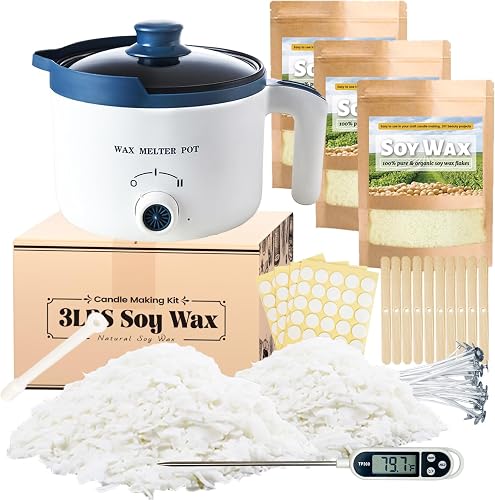
3lbs Soy Wax Melt Making Kit with Electric Wax Melting Pot

Soy Wax Candle Making Kit Supplies With Wax Melter, Natural Candle Wax For Candle Making, DIY Art&Crafts Kit…
DINGPAI Candle Making Kit Supplies, Candle Make Pouring Pot & Soy Wax
See more soy candle making kit on Amazon →
CeraVelas score: combines the average rating and the number of customer reviews on Amazon.
What a soy candle kit is
A soy candle kit is a candle making set where the wax is soy, or a blend in which soy is the main ingredient. Soy wax is soft, has a low melting point and holds onto the sides of a jar, which is why almost every soy kit is designed for container candles rather than pillars. A good kit pairs the wax with pre-tabbed cotton wicks or wooden wicks, a pouring pitcher, glass jars or tins, wick stickers, wick holders and a few fragrance oils.
Soy is popular with beginners because it is forgiving, easy to clean up with warm soapy water and comes from a renewable crop. It does have quirks, like frosting and a slightly weaker hot throw than paraffin, so knowing what to expect makes the difference. Our page on soy wax goes into the wax itself in more detail.
What to look for when buying
- Container soy wax, not pillar soy. Most kits use a container blend. If you want freestanding candles, you need a harder pillar blend instead.
- Wax weight. Look for at least 2 lb (900 g) if you want to make more than a handful of candles.
- Wicks suited to soy. Soy needs a slightly larger or hotter wick than paraffin. CD, ECO or wooden wicks are common. Look for wick sizes and the jar diameter they are meant for.
- Proper jars. Thick, heat-resistant glass candle jars or seamless tins. Thin decorative glass is a risk.
- Candle-grade fragrance oils. Fragrances should be designed for candles, with a safety data sheet available. Soy typically holds 6–10% fragrance; check the datasheet.
- Thermometer included. Soy is temperature-sensitive, so a thermometer is close to essential.
Kit sizes and what is inside
| Kit type | Soy wax | Other contents | Makes roughly |
|---|---|---|---|
| Small soy tin kit | 1 lb (450 g) | 4 tins, 4–6 wicks, 2–3 fragrances, stickers | 4 small 4 oz candles |
| Standard soy jar kit | 2–3 lb (0.9–1.4 kg) | Pitcher, thermometer, 6–8 jars, 10+ wicks, 4–6 fragrances, wick holders | 6–10 jar candles |
| Large soy kit | 5 lb (2.3 kg) or more | Pitcher, thermometer, 50+ wicks, dye, many fragrances, labels | 15–25 candles |
To work out exactly how much wax and fragrance your jars need, use our wax calculator and fragrance calculator.
How to use it and clean up
Prepare your jars first: wash them, dry them completely and stick the wicks to the center of the bottom. Weigh the soy flakes and melt them in the pitcher over simmering water. Typical soy blends are melted to about 80–85 °C (176–185 °F). Remove from heat, add the fragrance at the temperature your wax supplier recommends (often around 80 °C / 176 °F) and stir gently but thoroughly for two minutes.
Let the wax cool and pour it slowly, commonly in the 55–65 °C (131–149 °F) range. Center the wicks with the holders, and let the candles cool slowly at room temperature, away from drafts. Trim the wicks to about 1/4 inch (6 mm). Soy candles generally reach their best scent after one to two weeks of curing; see our candle curing guide. Then test burn one candle for a few hours.
Cleanup is one of soy's advantages: wipe the warm pitcher with paper towels, then wash with hot soapy water. Do not pour wax into the sink.
Safety
- Melt soy in a double boiler or a dedicated wax melter, never directly over a flame.
- Never leave melting wax or a lit candle unattended.
- Respect the fragrance oil's flash point and maximum load from the datasheet.
- Place burning candles on a heat-resistant surface, away from curtains, pets and children.
- If you sell soy candles, follow the supplier's safety documents and labeling recommendations.
Common mistakes
- Expecting soy to look like paraffin. White crystalline frosting is normal and does not affect burning.
- Pouring too hot. This causes wet spots and rough tops. Pour cooler and warm the jars slightly.
- Undersized wicks. Soy tunnels if the wick is too small; check with our wick calculator and a test burn.
- Burning on day one. Uncured soy candles smell weak. Patience pays off.
- Short first burns. Let the first burn reach a full melt pool to the edges to avoid tunneling.
Pros and cons
👍 Pros
- ✓ Soy is forgiving and easy to work with for beginners
- ✓ Cleans up with hot soapy water
- ✓ Made from a renewable plant-based wax
- ✓ Good adhesion to jars and a creamy look
👎 Cons
- ✗ Frosting and wet spots are common
- ✗ Hot throw can be softer than paraffin
- ✗ Needs one to two weeks of cure for the best scent
- ✗ Not suitable for freestanding pillars unless it is a pillar blend
How to use soy candle making kit, step by step
- Wash and dry the jars, then fix the wicks to the bottom with stickers.
- Weigh the soy wax and melt it in the pitcher over simmering water.
- Remove from heat and add fragrance at the recommended temperature, stirring for two minutes.
- Let the wax cool to the pouring temperature.
- Pour slowly into the jars and center the wicks with holders.
- Let the candles set at room temperature, away from drafts.
- Trim the wicks, cure for one to two weeks and test burn.
Tips
- Warm the jars with a heat gun or in a low oven before pouring to reduce wet spots.
- Keep a small amount of wax to top up any sinkholes.
- Weigh the fragrance; do not measure it by drops.
- Let candles cool slowly; fast cooling causes cracks and rough tops.
- Label each candle with its wick size and fragrance percentage.
Related supplies
🎁 Kits Complete candle making kit A complete candle making kit bundles wax, wicks, fragrance, a pouring pitcher and containers so you can make your first candles in an afternoon without hunting for a dozen separate supplies. See guide → 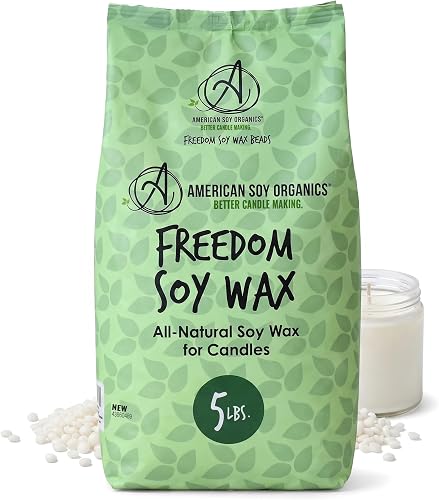 🫘 Waxes Soy wax Soy wax is the go-to natural wax for container candles: creamy, beginner-friendly and known for a slow, clean burn. See guide →
  🧵 Wicks Cotton candle wicks Pre-tabbed, pre-waxed cotton wicks are where almost every homemade candle starts: inexpensive, reliable and available in dozens of sizes. See guide →
  🏷️ Wicks Wick stickers Wick stickers are small double-sided adhesive dots that keep the wick tab stuck to the bottom of the jar while you pour your wax. See guide →
  🫙 Containers Glass candle jars Empty glass candle jars are the classic home for container candles: they show off the wax, hold heat evenly and, if you pick the right glass, stay safe from the first light to the last. See guide →
  🌸 Fragrance oils Fragrance oils Candle fragrance oils are scent blends formulated to handle the heat of wax and fill a room with fragrance, both before and while the candle burns. See guide →
 Frequently asked questions
Is soy wax good for beginners?
Yes. It melts at a low temperature, is forgiving and cleans up easily. Its main quirks are frosting and the need to cure.
How much fragrance does soy wax hold?
Many container soy waxes hold around 6–10%, but always check your wax datasheet and the fragrance oil maximum.
Why does my soy candle have white marks?
That is frosting, a natural crystal growth in soy. It is cosmetic and does not affect how the candle burns.
Can I use the kit wax for pillar candles?
Usually not. Container soy is too soft. You need a pillar blend or a harder wax for freestanding candles.