🛈 As an Amazon Associate, CeraVelas earns from qualifying purchases. If you buy through our links, Amazon pays us a small commission at no extra cost to you. That’s how we keep the site running. How we choose.
📑 Contents
⚡ Our top picks: candle snuffer
Stock checked on October 6, 2026


Best candle snuffer in stock
RTZEN Antique Bell Candle Snuffer, Unique Handcrafted Farmhouse Home Decor
RTZEN Antique Bell Candle Snuffer, Unique Handcrafted Farmhouse Home Decor
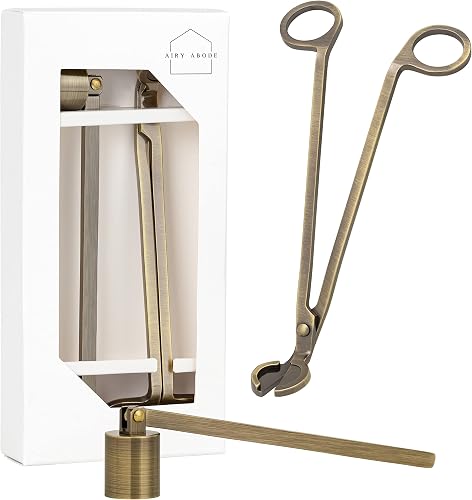
Airy Abode Candle Wick Trimmer and Candle Snuffer Accessory Set – Pick Your Color

Airy Abode Candle Wick Trimmer and Candle Snuffer Accessory Set – Pick Your Color
RONXS 3 in 1 Candle Wick Trimmer Set, Snuffer, Dipper, Cutter, Black
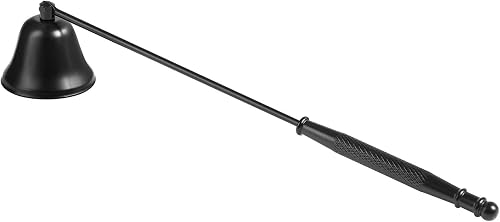
Kirecoo Black Long Handle Stainless Steel Candle Snuffer
See more candle snuffer on Amazon →
CeraVelas score: combines the average rating and the number of customer reviews on Amazon.
What a candle snuffer is
The classic snuffer is a small metal bell on the end of a long handle. You lower the bell over the flame, it runs out of oxygen and goes out in a second or two. Blowing a candle out works too, but it sends a puff of smoke into the room, can blow hot wax onto the jar or table and can bend or bury a soft wick.
A snuffer is especially useful for jar candles, where blowing hard enough to reach the flame often splashes wax, and for beeswax tapers and pillars on a dinner table. A close relative is the wick dipper: a thin metal hook that pushes the lit wick into the melted wax and then lifts it back up. It puts the flame out with no smoke at all and coats the wick in wax, ready for the next burn.
What to look for when buying
- Bell size: a bell around 2–3 cm (about 1 in) wide covers single-wick flames comfortably. Larger flames on three-wick candles need a larger bell or one wick at a time.
- Handle length: 15–25 cm (6–10 in) keeps your hand away from the heat. Long-handled models reach into deep jars and candelabras.
- Hinged bell: a bell that pivots stays level when you reach into a jar at an angle.
- Material: stainless steel or brass are durable. Painted or plated finishes are decorative but may darken with soot.
- Balance: a sturdy, weighted handle is easier to control than a flimsy one.
- Sets: often sold with a wick trimmer and a dipper, which together cover all candle care.
Types compared
| Type | How it works | Best for |
|---|---|---|
| Bell snuffer | Covers the flame and cuts off oxygen | Jar candles, pillars, everyday use |
| Long-handled bell snuffer | Same, with extended reach | Deep jars, candelabras, altars |
| Wick dipper | Dips the wick into the melt pool, then lifts it | Smoke-free snuffing in jars |
| Snuffer with lid (jar lid) | Closing the jar starves the flame | Candle tins and jars with lids, carefully |
How to use and clean it
- Lower the bell slowly over the flame without touching the wick or wax.
- Hold it in place for two or three seconds until the flame is out.
- Lift it straight up and check that the wick is not glowing.
- If you use a wick dipper, push the wick gently into the melted wax, then lift it upright again and center it.
- Let the wax cool before moving the candle.
Cleaning: soot builds up inside the bell. Wipe it with a dry cloth or a little rubbing alcohol once it is cold. Polish brass occasionally if you like the shine.
If you make your own taper candles or pillar candles, a snuffer is also handy during test burns, when you need to put candles out cleanly and check the melt pool.
Safety
- The bell gets hot. Rest it on a heat-resistant surface after use, not on fabric or wood.
- Never leave a burning candle unattended, and make sure the wick has stopped glowing before you leave the room.
- Never use water to put out a candle: it makes hot wax spatter and can crack glass.
- Putting a lid on a burning candle is not a reliable snuffer: some jar lids are not designed for heat. Use a snuffer instead.
- Read our candle safety guide for more good habits.
Common mistakes
- Lifting the bell too soon: the wick can relight or keep smoking.
- Pressing into the wax: the bell picks up wax and drips it later.
- Leaving the wick bent after dipping: always straighten and center it, or the next burn will be uneven.
- Snuffing before a full melt pool: on the first burn, let the melted wax reach the edges of the jar to avoid tunneling. Our troubleshooting guide explains why.
Pros and cons
👍 Pros
- ✓ No splattered wax or bent wicks
- ✓ Much less smoke than blowing out
- ✓ Long handle keeps your hand away from heat
- ✓ Durable and decorative
👎 Cons
- ✗ Bell can collect soot and needs wiping
- ✗ Small bells may not cover large multi-wick flames
- ✗ One more accessory to keep near your candles
How to use candle snuffer, step by step
- Lower the bell slowly over the flame.
- Hold it in place for two or three seconds.
- Lift it straight up and check the wick is not glowing.
- If using a dipper, dip the wick into the wax and straighten it.
- Rest the snuffer on a heat-resistant surface to cool.
Tips
- A hinged bell makes reaching into jars much easier.
- Wick dippers give the least smoke of all methods.
- Keep the snuffer next to your candles so you are never tempted to blow them out.
- A snuffer and trimmer set makes a great add-on to a handmade candle gift.
Related supplies
 ✂️ Tools Wick trimmer A wick trimmer is a small pair of angled scissors that reaches into jars to cut the wick to the right length, which means a cleaner flame, less soot and a longer-lasting candle. See guide →
  🫙 Containers Glass candle jars Empty glass candle jars are the classic home for container candles: they show off the wax, hold heat evenly and, if you pick the right glass, stay safe from the first light to the last. See guide →
  🥫 Containers Candle tins Metal candle tins are light, unbreakable and perfect for travel candles, gifts and craft fairs. Pick seamless tins with a good lid and you can make clean, reliable candles in any size. See guide →
  🐝 Waxes Beeswax Beeswax is the original natural candle wax: it burns for hours with a golden flame and smells softly of honey even without added fragrance. See guide →
  🧵 Wicks Cotton candle wicks Pre-tabbed, pre-waxed cotton wicks are where almost every homemade candle starts: inexpensive, reliable and available in dozens of sizes. See guide →
  🕯️ Molds Taper candle molds Taper candle molds let you pour tall, slim dinner candles that fit standard candlesticks, without spending an afternoon hand-dipping. See guide →
 Frequently asked questions
Is it better to snuff a candle or blow it out?
Snuffing is better: it creates less smoke, does not splatter wax and does not bend the wick.
What is a wick dipper?
A thin hook that pushes the lit wick into the melted wax to put it out, then lifts it back up. It produces almost no smoke.
Can I put a lid on a jar candle to put it out?
It can work, but not all lids are heat resistant and you cannot see when the wick stops glowing. A snuffer is safer.
How do I clean soot from a snuffer?
Let it cool, then wipe the inside of the bell with a dry cloth or a little rubbing alcohol.